
Malnutrition Hits Famine Levels in Two More Areas of Sudan’s North Darfur, Monitor Says
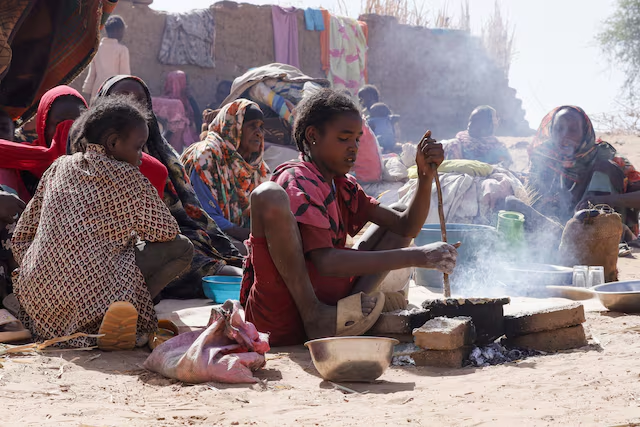
Acute malnutrition has reached famine levels in two additional areas of North Darfur, Sudan, the U.N.-backed Integrated Food Security Phase Classification (IPC) reported Thursday, amid a civil war that has displaced millions and fueled ethnically charged violence.
The IPC found famine thresholds exceeded in Um Baru, where malnutrition rates among children under five were nearly double the famine threshold, and Kernoi. While the IPC alert is not an official famine declaration, it signals alarmingly high levels of hunger based on current data.
Both localities, near the Chad border, received some of the tens of thousands who fled al-Fashir, previously declared in famine, last year after it fell to the Rapid Support Forces (RSF). Subsequent clashes occurred in Kernoi and Um Baru as the RSF tried to consolidate control.
The nearly three-year civil war between the RSF and Sudanese army has driven widespread hunger. In November, the IPC confirmed famine conditions in al-Fashir and Kadugli, where the Sudanese army recently ended a years-long siege. Cases of acute malnutrition nationwide are rising, reaching an estimated 4.2 million in 2026, up from 3.7 million in 2025.
Limited access to lifesaving health services has worsened the crisis. In Kernoi, only 25% of children with severe acute malnutrition were enrolled in treatment programs. In Greater Kordofan, ongoing conflict has disrupted food production and supply chains, the IPC said.
Aid organizations are also constrained by global funding cuts. CARE International told Reuters that starvation has become entrenched in many of the areas where it operates. Elizabeth Courtney, CARE’s Humanitarian Advocacy Advisor, stressed that urgent funding is needed to scale up supplies ahead of the rainy and lean seasons, when food stocks from previous harvests are low or depleted.
“Starvation has really become entrenched in some of the places where we’re working,” Courtney said.
TheDailyTourist © 2026 . All rights reserved.
 প্রিন্ট করুন
 সেভ করুন