

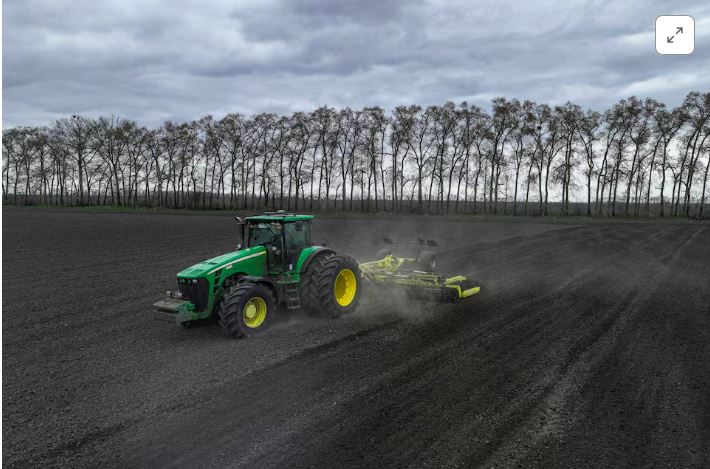

Ukrainian farmers are facing fresh economic pressure from rising fuel and fertiliser costs linked to the conflict involving Iran, adding to the challenges already caused by years of war with Russia.
Mykola Maliienko, a 70-year-old farmer in central Ukraine, says he has reduced his corn planting by 100 hectares this spring to cut costs. The surge in fertiliser prices and nearly doubled diesel costs have forced him to scale back operations on his 1,200-hectare farm.
His biggest concern now is securing enough fuel for the harvest season later this year.
“Our export potential could fall substantially,” Maliienko said, warning that production could drop by 15% to 20% this year, and as much as 40% if the situation persists.
Ukraine remains a major global supplier of grains, oilseeds and vegetable oils, exporting to around 150 countries—down from about 190 before Russia’s full-scale invasion in 2022. However, trade patterns have shifted, with exports to Europe rising while shipments to Asia and the Middle East have declined.
Analysts say Russia has gained market share, particularly in wheat, and now stands to benefit further from higher global energy prices. As a major oil and gas producer, Russia enjoys cheaper domestic fuel and fertiliser, while Ukraine depends heavily on imports.
Farmers across Ukraine report that production costs could rise by 10% to 30% in the short term due to higher fuel and fertiliser prices. Some warn that costs could surge even further if energy markets remain volatile.
Dmytro Skorniakov, head of agricultural firm HarvEast, predicted a 5% to 10% decline in farm output this season.
“There will definitely be a decline, unless we’re extremely lucky with the weather,” he said.
Ukraine’s agricultural sector is critical to its economy. Last year, farm exports generated more than $22 billion—over half of the country’s total export revenue—providing essential income for the government amid ongoing war.
However, exports remain below pre-war levels, and farmers continue to face labour shortages, damaged infrastructure, and disrupted supply chains.
The situation is worsened by repeated Russian strikes on Ukraine’s energy infrastructure, which have destroyed refineries and forced the country to rely on imported diesel from Europe.
Fuel demand peaks during planting and harvest seasons, making price spikes particularly damaging. Maliienko said diesel prices have nearly doubled in recent weeks, creating uncertainty over whether to buy now or wait for prices to ease.
“I don’t want someone calling me with much higher prices when I have crops ready but no fuel to harvest them,” he said.
Ukraine’s farmers also struggle with limited fuel storage capacity, as attacks on depots have made it risky to stockpile supplies. This leaves producers vulnerable to sudden shortages during critical farming periods.
While a recent temporary ceasefire involving Iran led to a drop in oil prices, analysts say it could take months for global energy markets to stabilise.
Ukraine’s government is attempting to ease the pressure by supplying discounted fuel through the state oil company, and officials remain cautiously optimistic about this year’s harvest, citing favourable weather conditions.
However, many farmers warn that without stable fuel and fertiliser supplies, production could fall and some producers may face bankruptcy.
“If we cannot bring the crop in, that will lead to a total collapse,” Maliienko said.
Experts note that while higher global food prices could eventually benefit Ukraine’s export earnings, the immediate outlook for farmers remains difficult as they navigate the combined impact of war, rising costs, and global instability.