


Nurul Azim- Dhaka:
A society can claim to be civilized only when it can protect its honest, humane and dedicated people. But the question arises in today’s Bangladesh – are we in that place? Or have we entered a strange silence, where even when injustice is happening before our eyes, the state machinery remains silent? Professor Dr. Kamrul Islam, the head of the kidney treatment center established in Shyamoli in the capital – where helpless people from villages come every day in the hope of a new life – is suffering from insecurity today. The man who has been known as the “poor doctor” for years, whose hospital prioritizes service over business – is now facing extortionists. The allegation is not just against one person, it is a reflection of a cycle. Where does a person named Moin Uddin, who introduced himself as a politician and demanded a ransom of five lakh taka – get his courage? To find the answer to this question, we have to look deep into society and the state. According to Professor Kamrul Islam, this person was once in charge of the hospital’s food supply. But he was removed for demanding excessive prices. This is where the root of the conflict begins. That is, a doctor is today a victim of threats and extortion for the “crime” of taking a stand against corruption. One thing is clear here – where there is honesty, there is a conflict with corruption. But whose side will the state stand on in this conflict? The answer to this question is the most important today. Professor Kamrul Islam said that he has informed the matter from the local police station to senior police officers. Complaints have even been made at the DIG and Additional IGP levels. But even after more than a month, no effective action has been taken. This silence is not only sad, it is frightening.
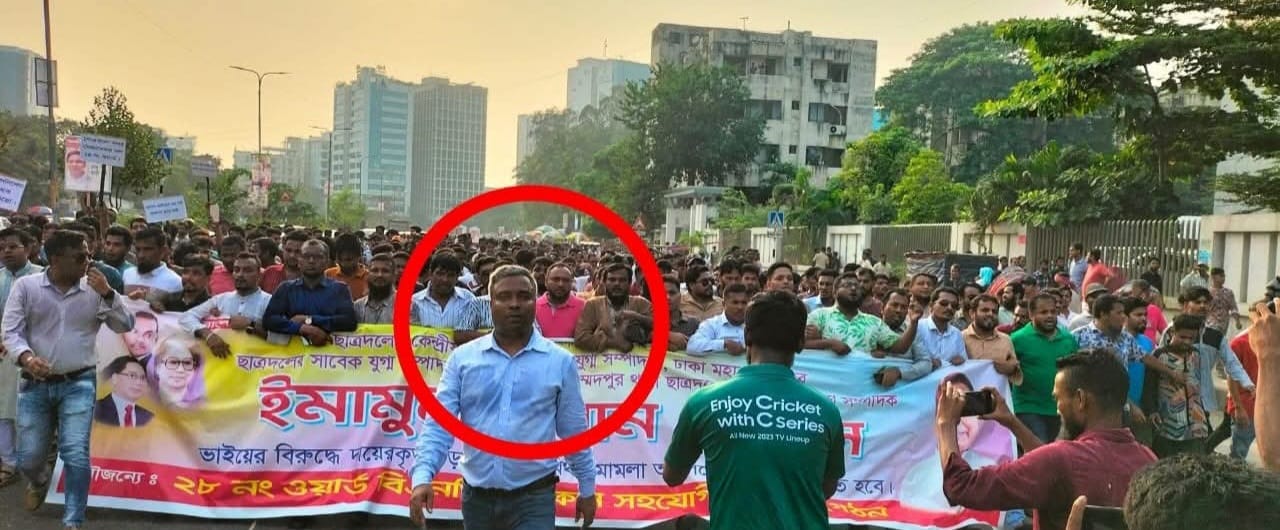
Because, the silence of the law increases the power of the criminal. If a common citizen complains to the police station and does not get any remedy, then he gets disappointed—it is natural. But if a renowned doctor, a state-recognized servant, faces the same experience, it raises questions about the entire system. Another important aspect of this incident is the misuse of political identities. Although the central leaders of the concerned organizations have said that the accused is not one of them—yet the reality is that it is possible to create fear in the society by using such identities. This is a dangerous signal not only for a party but for the entire political culture. The purpose of politics should be to serve the people, but if that name is used to extort, seize, and threaten—then politics becomes the name of terror for the common people. On the other hand, the activities of Professor Kamrul Islam’s hospital could have been an exemplary example for us. Where patients are given three meals a day, do not get separate bills, but rather are ensured treatment at low cost—that model should have been sponsored by the state. But in reality, it is seen that that institution is unsafe today. This is not just a doctor’s crisis—it is a crisis of the existence of a humanitarian initiative. If this situation continues, no one will dare to take such an initiative in the future. Because, they will know—if they are honest, if they follow the rules, one day or another they will have to face extortion. This reality is horrifying. Now the question—where is the solution? First, a quick and visible investigation into this incident is needed. Whoever the accused is, whatever his political or social identity—he must be brought under the law and punished.
Second, the accountability of the law enforcement agencies must be ensured. Those concerned must explain why no action was taken even after receiving the complaint. Third, special protection measures must be developed for honest and humanitarian initiatives. It is the state’s responsibility to provide security to those who work for the society. Finally, our society must also be aware. Remaining silent against injustice means condoning it. If we do not speak out today, this injustice will knock on our door tomorrow. The regret in the voice of Professor Kamrul Islam is not the voice of one person—it is the voice of thousands of honest people. If we don’t hear that voice even today, history will not forgive us. Because a society that cannot protect its servants will eventually lose itself.