
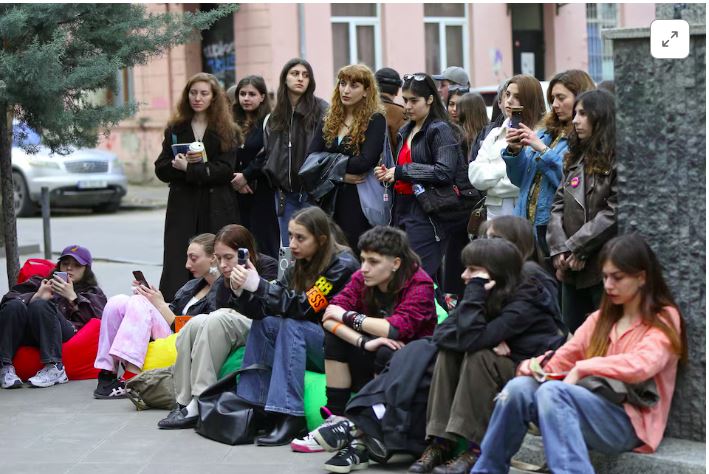


Students in Tbilisi are intensifying protests against sweeping higher education reforms, as Georgia faces growing criticism over what opponents describe as a broader shift away from Western alignment.
The reforms, adopted in February by the ruling Georgian Dream party, aim to restructure the country’s university system by redistributing academic programs and funding across regions. Officials say the changes are designed to better meet labor market demands and reduce the concentration of institutions in the capital.
However, critics argue the overhaul is politically motivated and part of a wider trend that began after Russia’s invasion of Ukraine, with Georgia increasingly distancing itself from the West and strengthening ties with Moscow.
Under the new policy, described as “one faculty, one city,” only one university in each city will be allowed to offer specific degree programs. The government will also determine which disciplines are taught at public universities and reallocate student admission quotas.
The reforms are expected to severely impact Ilia State University, one of Georgia’s leading research institutions. The university says more than 90% of its programs will be cut, potentially forcing it to shut down within three years. Admissions are set to drop sharply this year, from nearly 3,800 students to just 335.
Students and faculty have voiced strong opposition, warning that the changes could undermine academic freedom and weaken Georgia’s long-standing ties with European institutions. Some academics say the reforms risk isolating the country’s education sector, which has been deeply integrated with Europe.
A recent report by the Organization for Security and Co-operation in Europe noted signs of “democratic backsliding” in Georgia and raised concerns about the impact of the reforms, including fears they could disperse student-led protests.
The government, in power since 2012, denies accusations of authoritarianism, saying the reforms are necessary for efficiency and national stability. It has also accused opposition groups of attempting to incite unrest.
Despite this, protests that began in late 2024 have gained renewed momentum, with students warning that the reforms could “shut down free-thinking institutions” and limit opportunities for future generations.
While the government recently backed down from a planned university merger, uncertainty remains high. Some students say they are considering leaving Georgia, although others vow to continue protesting in hopes of reversing the reforms.