
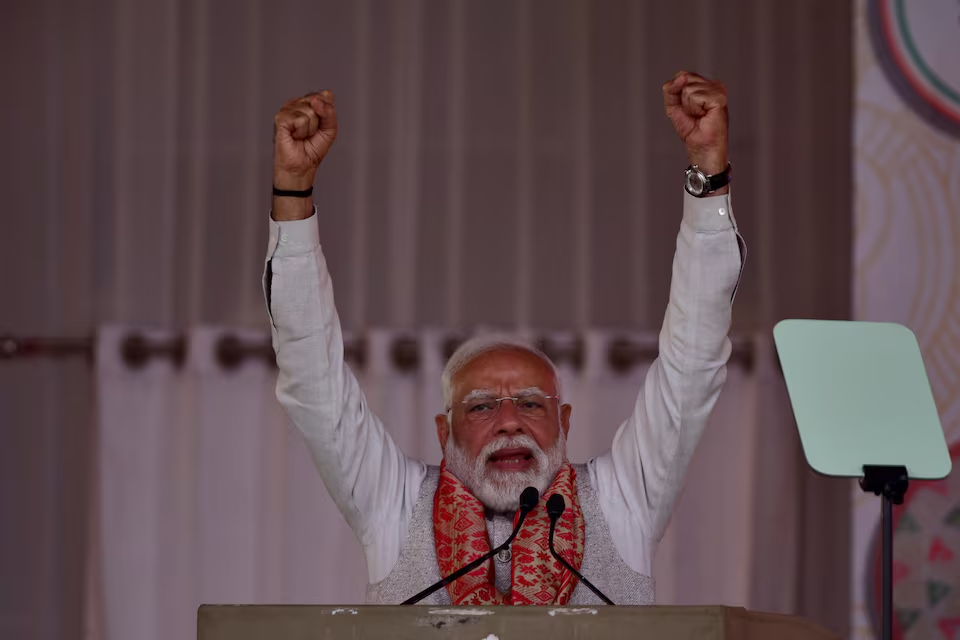


The government of India on Thursday introduced sweeping proposals to reshape its democratic system, including expanding parliament and increasing representation for women, though opposition parties have raised concerns over the move.
Prime Minister Narendra Modi told lawmakers in the lower house that the reforms would take the country in a “new direction,” emphasizing the importance of greater female participation in politics.
“I believe that women’s voice in this house will bring new strength, fresh thinking, and a greater sense of sensitivity,” Modi said.
The proposed legislation seeks to increase the number of members in parliament by around 55%, taking the lower house to approximately 850 seats by the next general election in 2029. Similar expansions are planned for state assemblies.
A key feature of the reforms is the reservation of one-third of seats for women in both national and regional legislatures. While such quotas were approved in principle in 2023, their implementation had been tied to a future census, potentially delaying them beyond the next election cycle. The new proposal aims to accelerate that timeline.
The government says the redrawing of electoral boundaries is necessary to reflect population changes since constituencies were last fixed following the 1971 census.
However, opposition parties—including the Indian National Congress—have criticized the plan, alleging it could be used to manipulate electoral outcomes. While supporting increased representation for women, they argue the reservation should be implemented immediately without broader structural changes.
The ruling National Democratic Alliance does not hold the two-thirds majority required to pass constitutional amendments, meaning it must secure backing from smaller parties and sections of the opposition.
The proposed reforms would also need ratification from at least half of India’s state legislatures before becoming law.
Currently, women make up nearly half of India’s roughly 968 million voters but remain underrepresented in politics, holding only about 14% of seats in the lower house and 17% in the upper house.
If passed, the reforms would mark one of the most significant overhauls of India’s parliamentary system in decades.