


-Md. Kamal Uddin:
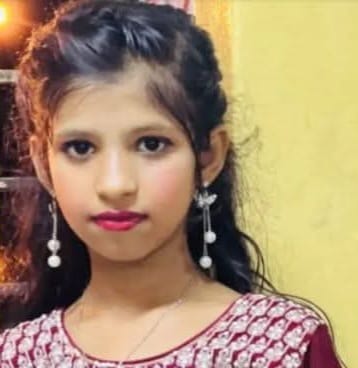
Reshmi—a name, but now it is no longer just a name; like a silent echo of a broken dream. Her face still has a childlike tenderness—like a silent afternoon light that has stopped time. Looking at that small body lying in the white hospital sheet, one can understand how fragile life can be, and how cruelly fate can change everything in an instant. Her eyes are closed, but even in those closed eyes, an unfinished childhood is hidden—the school bench, the playground, a friend’s smile, the familiar path of returning home at the call of her mother. Today, everything is covered by the sound of machines. The continuous beeping of the monitor is the only witness to her silent struggle. Her face is enchanting—absolutely innocent. There are no complaints, no questions. Just a deep, unspoken weariness, as if the little life has been forced to carry a very heavy burden for no reason. The silence that has accumulated on the lines of her forehead says—this was not a life written for a child. The world outside may be busy, but time seems to have stopped around this single bed. Every breath there is now as heavy as a prayer, every moment as a long shadow of uncertainty. Resmi is no longer just a child—she is a silent question, a tearful reflection, which awakens our conscience again and again—why does an innocent life stop like this? Raufabad in Chittagong is no longer just a geographical name—it is a symbol of deep pain, the name of a cruel reality, where the life-and-death juncture of an 11-year-old child seems to pierce the conscience of the entire society with silent questions. Resmi Akhter, a fourth-grade student, is lying in the ICU of the Neurosurgery Department of Chittagong Medical College Hospital today. Her tiny body is surviving with the help of machines, and every mechanical sound seems to tell the story of her shattered life. There is no longer any language in the eyes of the family waiting outside—only an infinite emptiness, a silent cry, and the burden of uncertainty. That Bloody Afternoon: A Child, a Death, a Society The incident took place on May 7. An ordinary day was changed in an instant by the shooting of terrorists in the Raufabad area under Bayezid Bostami police station. The sound of those shots was not just for a moment—it stopped the future of several lives. That day, 24-year-old Mohammad Raju lost his life on the spot. And in the same incident, 11-year-old Reshmi Akhter was shot. The image of a child shot in the head—how cruel this reality is cannot be fully expressed in words.
A child—who might have been busy with school homework at the time, or laughing with a friend—is fighting death in a hospital bed today. Limitations of treatment and the shadow of death Doctors knew from the beginning that the situation was very complex. Immediately after being shot in the head, he was taken to Chittagong Medical College Hospital. But it quickly became clear—this was not a matter of ordinary surgery. The medical team said that it was not possible to remove the bullet from Reshmi’s head. Her physical condition was so delicate that even starting the surgery became risky. The medical board sits, the experts review, but the reality remains harsh and cruel. Today, he is on life support in the ICU. Every moment, his body’s reactions, blood pressure, breathing—all are captured on the monitor. But there is no guarantee of life written there.
In the words of Professor Md. Baki Billah, head of the neurosurgery department at Chamek Hospital— “The girl’s condition is extremely critical. Her condition was critical from the beginning. The situation could get worse at any moment.” This sentence is not just a medical assessment—it is a summary of a family’s shattered dreams, a document of a society’s failure.
An endless wait outside the ICU Standing outside the ICU door, Reshmi’s family no longer sees time as time. Every minute is a battle for them, every second is a fear. Mother is gone—fatigue, broken dreams, and helplessness in the father’s eyes. No one is able to talk to anyone properly. Just the white walls of the hospital, the cold corridors, and the sound of machines—all combined into an incredible reality. No one ever asks, what did this child do wrong? Why would she need a bullet in the head? Why would a school-going child fight death? Society’s question, the state’s responsibility
After this incident, the question is raised again—what kind of society do we live in? How can terrorists use weapons on the streets in a way where not even a child is safe? The weakness of the security system, the violence of criminals, and the culture of swift impunity—all of these incidents seem to come back again and again. After each incident, there is a few days of discussion, some news, some outrage—and then silence again. But is the value of a child’s life like Reshmi limited to headlines?
The biggest wound in the erosion of humanity may not be physical—it is human. Are we slowly becoming a society where even the blood of a child is getting used to us? When a child is shot, it is not just the tragedy of his family—it is the failure of the entire nation. Because if a society cannot keep even its youngest member safe, how realistic is the demand for progress of that society? Reshmi: A name, a symbol Today, Reshmi is not just a child. She is a symbol—a symbol of insecurity, a symbol of state irresponsibility, and a symbol of our silence. With the fluctuation of her breath, we all seem to be faced with a question—have we really been able to build a civilized society? Not the last word, a restless wait. Reshmi’s story is not over yet. He may or may not return alive. Medical science has its limits, but sometimes people rely on prayer. His family now wants no logic, no analysis—they just want a miracle.
But for society, this incident leaves an abiding question—how many more children will we lose before we wake up? How many more Reshmis will we fight to the death before we understand the meaning of safety? Reshmii’s silent cry is floating in the air of the entire city today. Can we hear it?