


Investigation Report-1
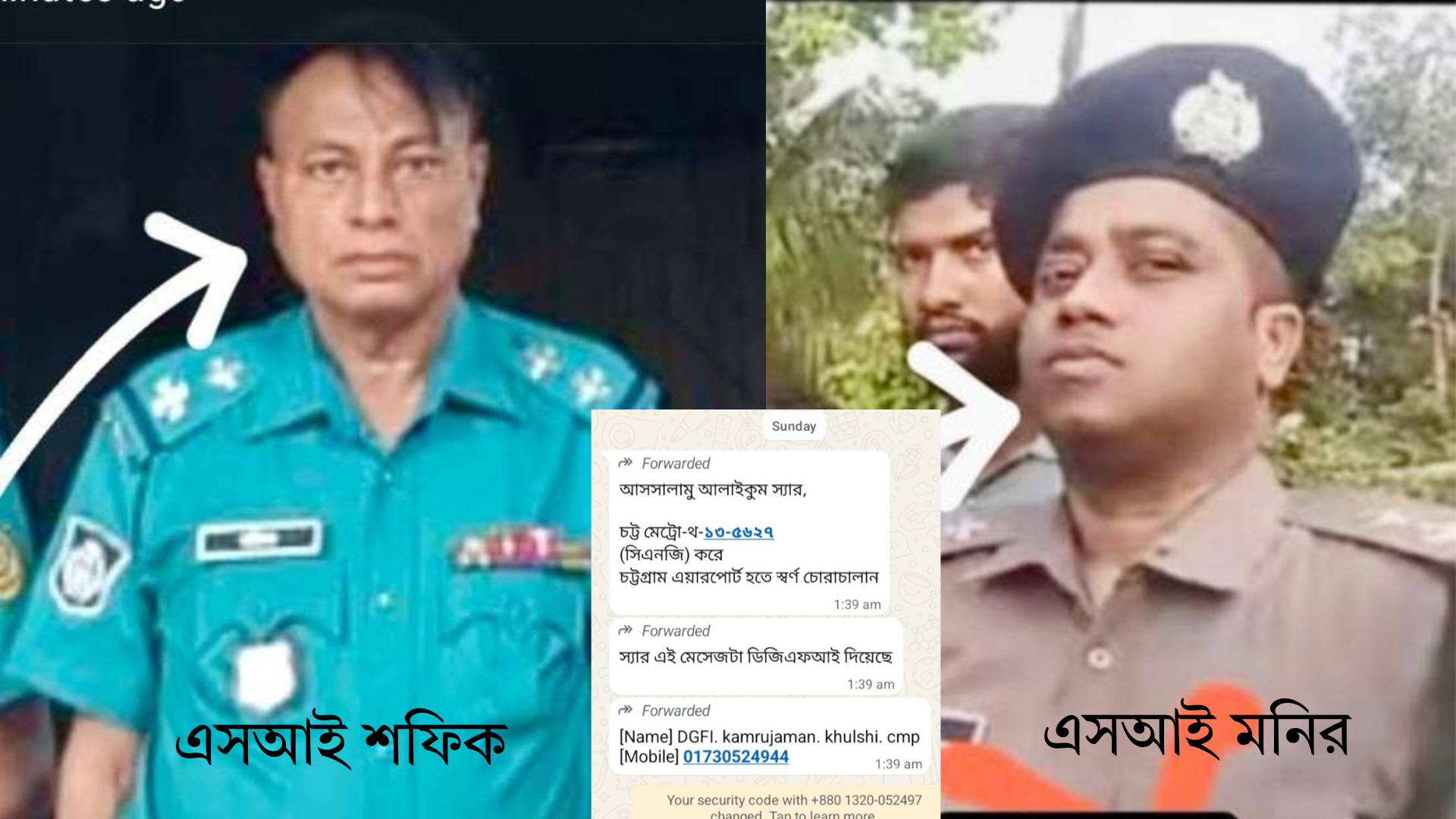
-Md. Kamal Uddin: The recent incident involving national cricketer Naeem Hasan is no longer just a law and order situation—it has become the focus of serious questions about the internal decision-making, information flow, and the effectiveness of the chain of command of the police. When questions, suspicions, and discussions gather around such an incident, a gray area is created between truth and speculation. The job of modern crime journalism is to illuminate that gray area—not with emotion or rumors, but with facts, evidence, and timeline-based analysis. In today’s investigative journalism, the explanation of an incident does not end with just “what happened”; rather, “how did it happen,” “who was involved at what stage,” and “where did the chain of decision break”—these questions become the focus of the main investigation. In this way, the structure of reality is gradually revealed, where each source of information, each flow of instructions, and the responsibility for each decision are analyzed separately. Because in modern crime reporting, truth is never one-dimensional—it is multi-layered, and understanding it requires an impartial and evidence-based perspective. Just as there has been a strong reaction on social media surrounding the incident, so too are various explanations and counter-interpretations being seen in the media. However, the most important issue is being repeatedly ignored—not emotion, rumors, or media pressure; the only way to uncover the real truth is through an impartial and fact-based investigation. Initial information: How the flow of events began According to the information received and claims from multiple sources, the incident began with a suspicious intelligence tip. The tip allegedly mentioned that gold could be smuggled in a CNG. Quick action was taken at the field level based on this tip. But this is where the controversy began. Because it has been alleged that this important information was not directly communicated to the officer-in-charge (OC) of the police station, Arifur Rahman. Rather, it was sent to another SI for implementation at the field level. The most controversial name: SI Monir The most discussed name at the center of the incident is now SI Monir. Multiple sources and investigative analysis have raised serious questions about his role. According to the complaint, he did not directly inform the OC of important information but sent instructions at the field level through SI Shafiq and the chain of command was not followed in the entire process. If this is true, then this is not just an administrative error but a serious violation of the basic operational structure of the police. Allegation of breaking the chain of command
In any operation or suspicious action in the police system, the OC of the police station is the central decision-maker. But in this incident, the question arises – why was the information flow conducted without the OC? Why did SI Monir play a direct decision-making role? Was this a personal initiative, or an internal coordinated process? The answers to these questions are still not clear, but the demand for an investigation is growing stronger. Dhaka vs. Chittagong: Mystery over location Another important piece of information has emerged from various sources. It is claimed that SI Monir was in Dhaka at the time of the incident. However, decisions and instructions at the field level were implemented in Chittagong. This raises new questions – how did an absent officer influence field-level operational decisions? Is this technology-based communication, or some unusual coordination outside the administrative structure?
Naeem Hasan Issue: Suspicion, Operation and Tension The most sensitive part of the incident is the situation surrounding national cricketer Naeem Hasan. According to the allegations, he was brought into a checking or operation situation based on suspicious information, which later turned into tension. Here is the main question – should such a step be taken without verification? To what extent was the authenticity of the information verified? What was the role of SI Monir in making the decision? The role of the OC: Informed or intentionally excluded? After the incident, discussions also arose around OC Arifur Rahman. However, according to the information received, it is being claimed that he was not aware of the matter at the beginning. Later, he played a role in controlling the situation. This raises a new question – why was the decision taken without excluding the police station chief? Is this a communication failure or a deviation in the planned information flow? The 1:40 am message and growing suspicion Another important aspect is the exchange of messages during the night. According to sources, at around 1:40 am, SI Monir again sent a message through ASI Bayezid, but the OC was not directly informed at that time. This raises further questions—why is the flow of information repeatedly bypassing the OC? Media trial vs. real investigation Currently, there is a tendency to make one-sided comments and blame on social media regarding the issue. But declaring someone guilty or innocent before the investigation is complete is a dangerous trend—called a “media trial.” This hides the real truth and creates the risk of influencing the investigation process.
Key questions raised Questions that are still unresolved around the entire incident—Who is the source of the original information? How much was the information verified? Why was the OC not informed at the beginning? Was SI Monir’s role directive? Where did the chain of command break in the entire process? Investigation is the last word—all in all, it can be said that the incident is still surrounded by many questions and it is inappropriate to reach any final conclusion. Especially the serious allegations and suspicions that have been raised about SI Monir’s role, it is essential to bring it under impartial investigation. However, at the same time, it is also true—just as it is wrong to socially convict someone, protecting someone without a real investigation is also against justice. Ultimately, the truth is one—justice is established on the basis of evidence, information, and impartial investigation; not on rumors or emotions. Analyzing the overall context of the incident, one thing clearly comes to the fore—although SI Monir’s role in the entire information flow, decision-making, and field-level implementation process is very important, it has not yet been fully and visibly evaluated under the investigation. As a result, the public has raised questions as to why no visible disciplinary action or withdrawal decision has been taken against SI Monir even though administrative action has been taken against other officers and members involved in the same incident. According to the information received and the analysis of the course of events, it can be seen that a sensitive information or message—which was allegedly used as the basis for an operational decision—was sent to the field level through a different channel without being coordinated directly through the officer-in-charge (OC) of the police station. According to the conventional chain of command of the police, such important information is supposed to be implemented through the OC by informing him and his instructions or coordination. But in this case, there are serious questions as to whether that structure was followed or not. In particular, the role of SI Monir has come under central suspicion here. The allegations and analysis say that although he worked as the main coordinator of the information flow, he sent instructions or messages through another SI without properly informing the OC. If this information is correct, then this is not only a violation of administrative discipline, but also an example of a decision-making coordination deviation. Another important aspect is that the SI and the constable concerned who were conducting the field operations during the incident have been closed down and the officer-in-charge (OC) of the police station has been withdrawn. But the SI Monir, who is alleged to have played a central role in the main information flow or instruction cycle of the same incident, is still in charge—this has raised questions in the public mind.
This situation naturally creates the idea of an administrative disparity or uneven management. If the incident occurred on the basis of a lack of coordination or incorrect information, then everyone who played a direct role in that information flow should be equally subject to investigation and administrative evaluation. But in reality, that balanced approach is not visible. On the other hand, the continuity of information exchange during and after the incident shows that even though messages were transferred at multiple levels, it is alleged that it remained outside the full knowledge of the higher authorities. This raises questions about the internal discipline of the police and the transparency of the distribution of responsibilities. In this whole context, an important question arises—if the OC and field-level officers can be administratively held accountable, why is SI Monir, the accused main coordinator of the information flow of the same incident, still excluded from the same administrative decision? Is this part of the process under investigation, or is there some kind of inconsistency or invisible influence in the decision-making? As a crime analyst journalist, the opinion presented to the administration clearly states that the real truth cannot be revealed without a complete, impartial and level-based investigation of this incident. The investigation must equally analyze the source of information, the chain of information flow, the decision-making process and the implementation at the field level. At the same time, it is important to clearly determine under whose instructions or in what process SI Monir played the role of transmitting and coordinating information. If his role is limited to administrative communication only, then that should be considered separately. But if it is proven that he broke the chain of command and played a decisive role, then that should also be equally brought under administrative accountability. Above all, the incident is no longer individual-centric; it has become a matter of verifying the effectiveness of the institutional transparency, accountability and decision-making process. Therefore, there will be a call to the concerned administration to re-review every level of the entire incident and ensure fair and impartial decision-making, so that such incidents do not happen again in the future and the foundation of public trust is further strengthened.
Personal opinion—-
In the view of modern crime journalism, uncovering the truth of an incident never depends on a single comment, emotional reaction, or explanation spread on social media. Rather, it is a slow, layered, and evidence-based investigative process—where information, timelines, decision-making chains, and each step of responsibility are analyzed separately.
Behind a crime or controversial incident, there is usually a complex network of invisible communication, instructions, approvals, and implementation beyond the visible events. Modern investigative journalism tries to uncover that invisible network—who provided the information, who verified it, who implemented it, and where the chain of decision-making process broke down—its main goal is to find answers to these questions. The most important thing in such a flow of events is the “chain of command” and “information flow.” When sensitive information is implemented at the field level through multiple levels, the responsibility and accountability of each level becomes equally important. If any one level intentionally or unintentionally distorts this flow, the entire incident takes on a different dimension—which is not just an administrative failure, but also raises a structural question. In modern crime reporting, therefore, no individual is left out of the trial, nor is anyone ultimately convicted without evidence. Rather, an impartial picture is presented through a series of analysis of information, documents, timelines, and decisions—which ultimately paves the way for uncovering the truth. The most important principle in this context is—“No narrative without evidence, no conclusion before investigation.” That is, no story without evidence, no conclusion before investigation. Modern investigative journalism does not just tell the facts, but also analyzes the structure of how the event happened, why it happened, and who was involved in it. As a result, in any controversial event, the main question is not just “what happened,” but “how it was allowed to happen” and “whose decision or failure caused it”—these aspects become the real focus of the investigation.
To be continued—