
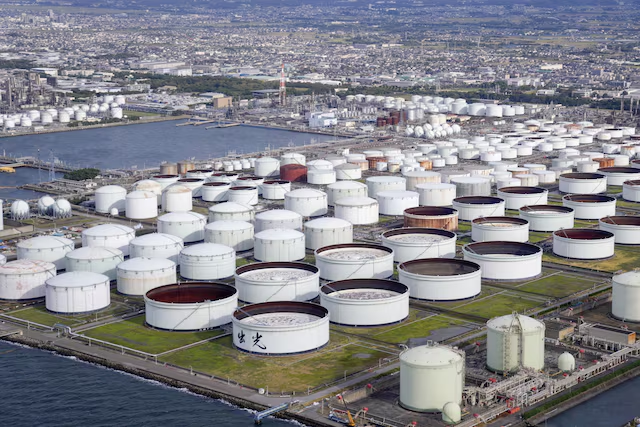
The government of Japan is considering releasing part of its national oil reserves due to the ongoing crisis caused by the war in Iran, which has disrupted global energy supplies, Kyodo news agency reported on Friday citing sources. The plan could involve coordination with other countries or, if necessary, unilateral action.
Japan depends on the Middle East for about 95% of its oil imports, with roughly 70% of those shipments passing through the Strait of Hormuz, which has effectively been closed because of the conflict in Iran.
Tokyo maintains emergency national oil reserves equivalent to approximately 146 days of consumption, in addition to private-sector stockpiles and joint reserves shared with oil-producing nations. Overall, Japan’s total oil stockpiles amount to 254 days of imports, making them among the largest in the world.
Earlier this week, officials stated that Japan had no immediate plans to release its reserves. The country’s industry ministry did not respond to requests for comment on Friday.
Kyodo reported that the government intends to monitor developments and evaluate whether to release part of its national stockpile to domestic companies to stabilize energy supplies. Authorities will assess the scale of any release and whether it should be coordinated with other countries or carried out independently to mitigate shortages resulting from the closure of the Strait of Hormuz.
Japan previously released portions of its oil reserves in coordination with the International Energy Agency and other nations following Russia’s invasion of Ukraine in 2022.
 প্রিন্ট করুন
 সেভ করুন