
Third Gender: Identity, Human Rights and Social Reality An Investigative Analysis Centered on a Case Filed at Kotwali Police Station and Allegations of “Artificial Hijra Creation”
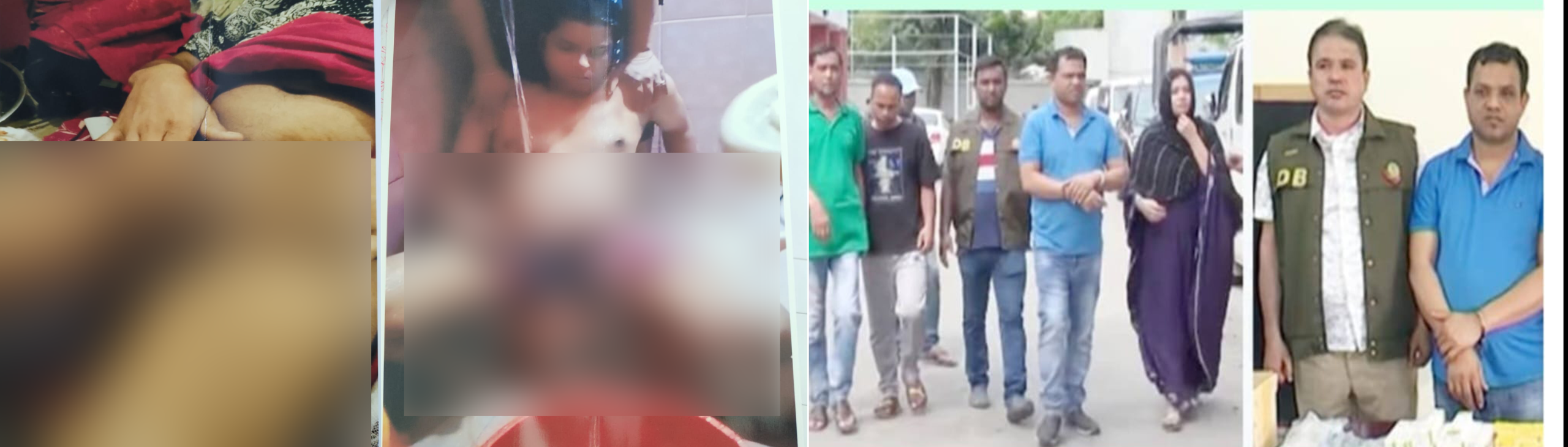 — By Md. Kamal Uddin
The third gender community, commonly referred to as the Hijra community in South Asia, represents one of the oldest, most complex, and multidimensional human realities in civilization. Historically, this community has been viewed in different ways—sometimes as part of religious and cultural rituals, sometimes as a symbol of social marginalization, and in contemporary times, increasingly through the lens of human rights and gender identity discourse. Yet, despite evolving recognition, the reality remains unchanged in many respects: this community continues to live under deep social, economic, and institutional vulnerability. Hijra Identity: History, Language, and Conceptual Evolution
The term “Hijra” is believed to originate from the Arabic word “Hijr,” meaning separation or abandonment. In South Asian society, the term has been in use for centuries. Historically, colonial English literature often referred to them as “eunuchs,” but in modern legal and sociological discourse, “Third Gender” is now widely accepted. However, contemporary scientific and sociological understanding suggests that third gender identity is not merely about biological anatomy. It is increasingly recognized as a form of gender identity, shaped by psychological, biological, and social dimensions. Medical researchers and gender specialists note that genetic variations such as XXY chromosomes or hormonal differences can sometimes influence gender development. These variations are not considered diseases or abnormalities but rather part of natural human diversity. Social Reality: Marginalization and Exclusion In Bangladesh and many other South Asian countries, the Hijra community has historically faced systemic exclusion. Many individuals are forced to leave their families and live in segregated communities. Access to education, employment, healthcare, and social protection remains extremely limited. As a result, a significant portion of this community becomes dependent on informal livelihoods such as begging, ceremonial income collection, or irregular labor. Social neglect and economic insecurity further deepen their vulnerability. Although state recognition exists in legal frameworks in several countries, practical inclusion remains limited. Consequently, many remain outside mainstream social and economic structures. Case Filed at Kotwali Police Station: Allegations and Investigation A recent case filed under the Human Trafficking Prevention Act in the Kotwali Police Station area of Chattogram has generated widespread discussion. Summary of Allegations
According to the complainant: The victim was residing in a rented accommodation and developed acquaintance with certain individuals. Over time, a group allegedly formed a controlling and manipulative relationship with the victim. The complainant alleges psychological coercion and intimidation, resulting in prolonged mental control. At a certain stage, the victim was allegedly subjected to physical harm. Eventually, the victim informed her family and initiated legal action.
The First Information Report (FIR) further alleges that the accused individuals may have been involved in organized coercion, social control, intimidation, and possible human trafficking-related activities.
Police sources confirm that the case is under active investigation, including verification of evidence, witness statements, and the roles of the accused individuals. Public Reaction and Social Concerns
Following the emergence of the case, significant public concern has been observed in the local community. Human rights activists and social analysts argue that if the allegations are proven true, the issue is not merely criminal in nature but reflects a broader societal failure. Marginalized communities often live in structurally vulnerable conditions, which can expose them to exploitation, coercion, and abuse by organized groups or individuals. Allegations of “Artificial Hijra Creation”: A Disturbing Debate In a separate but equally alarming incident reported in the capital, allegations have surfaced regarding a group allegedly involved in unethical medical practices aimed at forcibly altering individuals into third gender identity categories. Core Allegations During a law enforcement operation, some individuals were detained. The allegations include: Operation of unauthorized medical or pseudo-medical services under false identities Use of cosmetic procedures and hormonal substances
Financial exploitation through body modification practices Possible illegal surgical interventions
Recovery of medical equipment and pharmaceutical materials during raids Critical Question: Can Gender Identity Be “Manufactured”? This incident raises a fundamental question: Can gender identity be artificially created, or is it an inherent psychological and biological reality? Experts strongly argue that gender identity cannot be manufactured through external coercion, illegal procedures, or medical manipulation. It is a deeply complex interaction of biological and psychological factors. Medical Ethics and Legal Perspective From a medical ethics standpoint: Medical practice by unqualified individuals constitutes a criminal offense Forced bodily alteration violates fundamental human rights Financial exploitation through risky procedures is unethical and dangerous Unauthorized medical interventions can have severe physical and psychological consequences Experts emphasize that such practices not only violate law but also endanger human life and dignity. Internal Structure of the Hijra Community
The Hijra community often follows its own social structure, typically led by a “Guru Ma” system. Different groups operate within defined territories and social hierarchies. While this structure provides internal cohesion and identity, it may also lead to internal power dynamics, control mechanisms, and social dependency. Human Rights Perspective: Key Challenges The major challenges faced by the third gender community include: Lack of social acceptance Limited access to education Employment discrimination Insecurity and vulnerability Weak enforcement of legal protections Human rights experts recommend: Inclusive education and vocational training Employment opportunities in public and private sectors Dedicated healthcare services Strong awareness and anti-discrimination programs
Structural Analysis of the Crisis The two incidents—the Kotwali Police Station case and allegations of artificial identity manipulation—reflect different dimensions of the same structural reality. One highlights vulnerability, coercion, and potential criminal networks targeting marginalized individuals.
The other reveals ethical violations, illegal medical practices, and economic exploitation surrounding a sensitive social identity. Together, they expose deep structural weaknesses in governance, healthcare oversight, and social protection systems. Responsibility of State and Society Addressing these issues requires a multi-layered approach: 1. Law Enforcement Strict enforcement of laws against trafficking, exploitation, and illegal medical practices is essential. 2. Social Inclusion The third gender community must be recognized not as outsiders but as equal members of society. 3. Education and Employment
Without skills development and job opportunities, marginalization will continue to deepen. 4. Awareness and Attitude Change Legal reforms alone are insufficient unless accompanied by societal transformation. Conclusion The third gender community is not a separate or isolated group—they are part of the diversity of human existence. Understanding their lives, struggles, and identity is not only a matter of policy but also of humanity. The Kotwali case and the allegations of illegal medical manipulation are not isolated incidents; they reflect deeper structural and moral questions within society. Ultimately, the question is no longer simply who they are—but rather how we see them, and how humane we are willing to be.
TheDailyTourist © 2026 . All rights reserved.
 প্রিন্ট করুন
 সেভ করুন