


London, Feb 17, 2026 — British inflation slowed sharply in January to its lowest level in nearly a year, strengthening market expectations that the Bank of England (BoE) could cut interest rates as soon as March, official data showed on Wednesday.
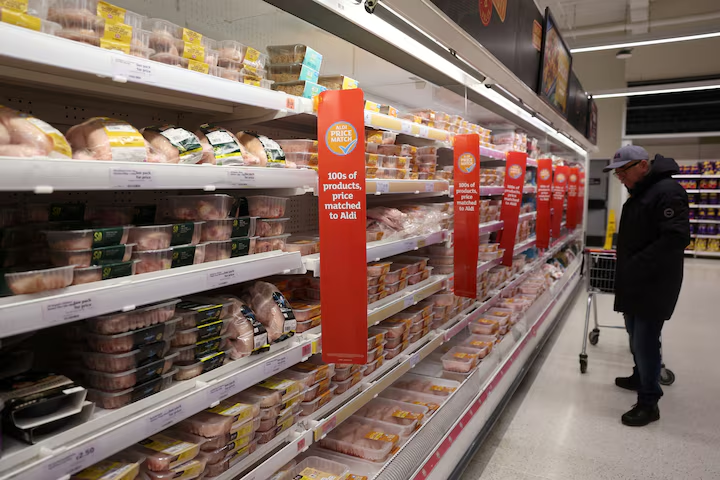
The Office for National Statistics (ONS) said consumer prices rose 3.0% year-on-year in January, down from 3.4% in December, as price rises eased for transport, food, and non-alcoholic drinks.
The figure matched the median forecast in a Reuters poll, while the BoE had projected inflation of 2.9% last month and expects it to fall close to its 2% target in April.
Food inflation — closely watched by the BoE because of its influence on household expectations — was the weakest since April last year. Airline fares also fell sharply in January after surging in December.
Core inflation, which excludes energy, food, alcohol and tobacco, eased to 3.1%, the lowest since 2021.
“Today’s figures mean the Bank of England will likely cut Bank Rate in the spring,” said Nicolas Crittenden, an associate economist at the National Institute of Economic and Social Research. He added that further cuts were likely later in 2026 as inflation fades and unemployment gradually rises.
Interest rate futures moved after the data, with traders assigning an almost 90% probability of a March rate cut — up from around 80% before the figures were released.
The pound was little changed against the U.S. dollar.
Despite the drop in headline inflation, underlying price pressures remained stubborn in some areas, which could keep more hawkish BoE policymakers cautious.
Services inflation — a key measure of domestic price pressures — slowed only slightly to 4.4% from 4.5% in December, remaining above expectations of 4.3%.
BoE Chief Economist Huw Pill said last week that underlying inflation appeared to be settling above target at around 2.5%, warning that interest rates might still be “a little bit too low.”
“The big drop in headline UK inflation in January is a welcome development, but under the hood the data wasn’t quite as convincing as hoped,” said Adam Hoyes, senior asset allocation analyst at Rathbones.
UK inflation remains the highest among the Group of Seven nations and continues to run above inflation rates in the United States and the euro zone, which stood at 2.4% and 1.7% respectively in January.
However, economists expect UK inflation to slow further in April as last year’s rises in utility bills and other government-controlled tariffs drop out of the annual comparison.
The inflation data comes as Britain’s economy showed little growth at the end of 2025. Labour market figures released Tuesday indicated job losses were continuing, though there were signs of stabilisation.
Separate ONS data on Wednesday showed factory gate prices rose 2.5% in the 12 months to January — the slowest pace since June last year and down from 3.1% in December.