
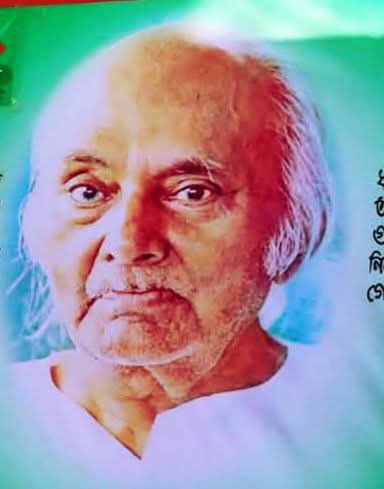


By Mohammad Kamal Uddin
While Kazi Nazrul Islam is widely remembered as the Rebel Poet, the poet of love, equality and humanity, another powerful chapter of his life remains equally significant — his role as a fearless journalist and editor who used the pen as a weapon against oppression.
Long before modern activist journalism became a recognised concept, Nazrul transformed newspapers into platforms of resistance, social reform and public awakening during British colonial rule in the Indian subcontinent.
Following the First World War, the region was gripped by political unrest, anti-colonial movements and growing anger against British rule. After serving in the army, Nazrul moved to Kolkata, where he became deeply involved in literature and journalism. He believed journalism should not merely report the voices of rulers, but should stand beside oppressed people and challenge injustice.
Nazrul’s early journalistic career flourished through the newspaper Nabajug, where he wrote editorials, political analyses and articles on social reform. His writing style was poetic yet sharp, emotional yet logical, making complex political realities understandable to ordinary readers.
Through his articles, Nazrul openly criticised British colonial rule while also speaking against social superstitions, communalism and class discrimination.
Nazrul’s most revolutionary journalistic chapter came with the publication of Dhumketu in 1922. The name itself — meaning “Comet” — symbolised fiery resistance and rebellion.
As editor, Nazrul used the weekly publication to directly challenge British authority. His editorials, poems and essays called on people to rise against injustice and oppression. His language carried the intensity of a thunderstorm — sometimes fierce, sometimes deeply emotional, but always driven by humanity and courage.
The British government became particularly alarmed after the publication of his famous poem “Anandamoyeer Agamane,” which authorities viewed as an attempt to incite rebellion. Nazrul was later arrested on sedition charges.
Even in prison, however, he refused to surrender. He launched a hunger strike and continued protesting through his writings, turning imprisonment itself into a symbol of resistance.
Through another publication, Langal, Nazrul highlighted the struggles of workers, farmers and marginalised people.
He strongly believed that true freedom could never exist without social equality. His journalism consistently focused on poverty, exploitation, economic inequality and the suffering of ordinary people.
Nazrul was not only a political journalist — he was a journalist of humanity.
Nazrul’s journalistic style was unlike anything of his time. He blended literary beauty with political resistance, often making editorials read like poetry in prose form.
His journalism was defined by several core principles:
Fearless resistance against injustice and oppression
Commitment to humanity beyond religion, race or class
Advocacy for communal harmony between Hindus and Muslims
Literary elegance in political writing
Standing beside ordinary people instead of elites
In modern terms, Nazrul could easily be described as a pioneer of activist journalism. He never viewed newspapers as tools for business or personal fame. Instead, he saw journalism as an instrument for social change and moral awakening.
For Nazrul, the pen was a weapon and the newspaper was a battlefield for truth.
That is why he remains immortal not only as a poet, but also as a courageous editor, rebellious journalist and principled public intellectual whose legacy continues to inspire generations.
His journalism still teaches one timeless lesson: speaking the truth is never easy, but the courage to speak it is the true identity of a journalist.