

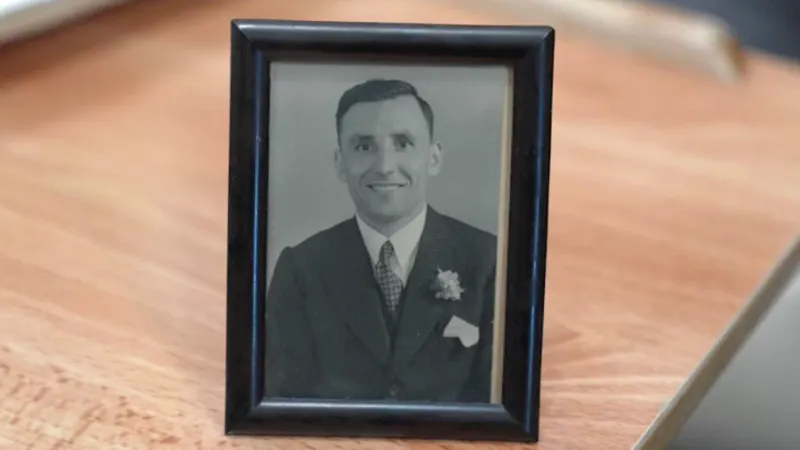

A decades-long mystery surrounding a Soviet prisoner of war who escaped Nazi captivity during World War Two has finally been solved, reconnecting families across continents more than 80 years later.
Known only as “Tom,” or Bokejon, the soldier had been among roughly 2,000 Soviet prisoners and forced labourers brought to Jersey by Nazi forces to build fortifications during the war.
In 1943, Tom escaped from a forced labour camp on the island, weak and starving. He sought refuge with local farmers John and Phyllis Le Breton, who risked their lives to shelter him for more than two years under German occupation.
In diary entries written during that time, Tom described the brutal conditions of the camps, including long hours of hard labour, minimal food, and severe beatings. Despite the danger, the Le Breton family hid him until the liberation of the Channel Islands in 1945.
After the war, Tom—like many Soviet prisoners—was sent back to the USSR. Although he initially wrote letters to the family, contact was eventually lost, leaving his fate unknown for decades.
The case has now been resolved through an investigation led by the BBC, which traced his identity and family to Central Asia. Researchers identified him as Bokejon Akramov, born in 1910 and mobilised from Namangan in present-day Uzbekistan.
A breakthrough came after archival records revealed he had later been awarded the Order of the Patriotic War, which included a home address. Journalists then travelled to Namangan, where they located his descendants.
His grandson, Shamsiddin Ahunbayev, was astonished to see photographs of his grandfather preserved by the Le Breton family. He said the discovery brought deep emotion, as his grandfather had rarely spoken about his wartime experiences.
According to relatives, Akramov lived a quiet life after returning home, working as a gardener despite his abilities—possibly due to suspicion faced by former prisoners of war under Soviet rule. He died in 1996.
The BBC later arranged a video call between Akramov’s family in Uzbekistan and Dulcie Le Breton, now nearly 90, who remembered Tom as a beloved figure from her childhood.
“Our grandfather survived the war and gave us life only because of you,” Ahunbayev told her, thanking the Le Breton family for their courage.
Dulcie responded by saying her parents had simply done what they believed was right, noting that many others in Jersey had also risked their lives to help escaped prisoners.
In recognition of their actions, authorities in Uzbekistan have posthumously awarded John and Phyllis Le Breton the Order of Friendship, one of the country’s highest honours, for their bravery and compassion.
The story sheds light on the forgotten experiences of Soviet prisoners of war and highlights an enduring legacy of humanity during one of history’s darkest periods.