

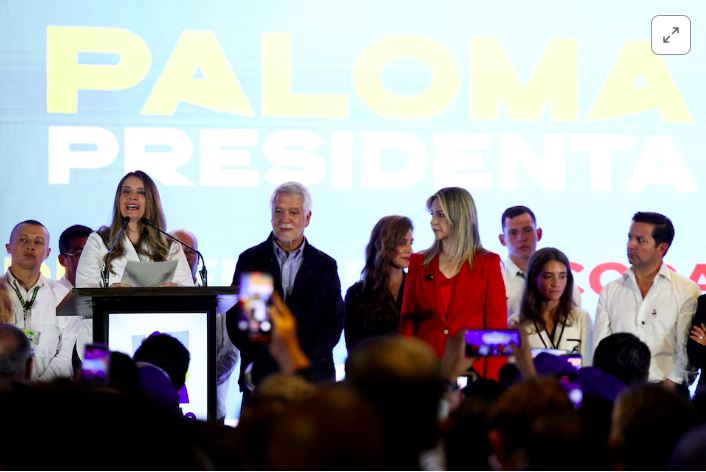

Colombia’s ruling left-wing coalition and the main opposition party appeared set to secure the largest number of seats in Congress following Sunday’s legislative elections, according to preliminary vote counts. However, neither side achieved a majority, underscoring the country’s deeply fragmented political landscape.
More than 3,000 candidates competed for 102 seats in the Senate and 182 seats in the House of Representatives. Voters also selected three presidential candidates who will compete in the national election scheduled for May.
Early results indicated that the right-wing Democratic Center party, led by former president Alvaro Uribe, and the leftist Historic Pact coalition — which helped bring President Gustavo Petro to power — were on track to win the largest share of seats in the Senate. Despite this, neither group appeared likely to secure an outright majority.
Several traditional political parties are also expected to retain representation in Congress, including the Colombian Conservative Party, the Colombian Liberal Party, the Social Party of National Unity, Radical Change, and the Green Alliance.
A similar picture emerged in the lower house, where both the Democratic Center and the Historic Pact appeared set to hold the largest blocs, though neither looked likely to gain an absolute majority.
Political analysts had anticipated that the vote would be split among around two dozen parties, meaning the next president will likely need to build a coalition government to secure legislative support.
Sergio Guzman, director of political risk consultancy Colombia Risk Analysis, said the results showed that the political balance in Colombia remains divided. According to him, the left has demonstrated its continued presence in national politics, while the right remains influential but internally divided, resulting in a fragmented Congress for the upcoming legislative term.
Alongside the legislative vote, right-wing, left-wing and centrist political groups held primaries to select candidates for the presidential election in May.
Democratic Center Senator Paloma Valencia won the right-wing primary. Former Senator Roy Barreras, an ally of President Petro, secured victory in the left-wing contest, while former Bogotá mayor Claudia Lopez won the centrist primary.
These three candidates will compete in the May presidential election along with Abelardo De La Espriella, Ivan Cepeda and Sergio Fajardo, who represent the right, left and center respectively and chose not to participate in the primaries, opting instead to run directly in the first round.
More than 41.2 million Colombians were eligible to vote in the elections, though preliminary data indicated that voter abstention exceeded 50 percent.
After casting his vote in northern Bogotá, 32-year-old business administrator Federico Rodriguez emphasized the importance of public participation in the democratic process, saying it is vital for citizens to vote so the country can determine its future and respect the outcome.
President Gustavo Petro, whose term ends in August, has repeatedly raised concerns about the software used to tally votes, alleging potential irregularities. However, National Registrar Hernan Penagos has assured the public that the voting process is transparent and said political party observers are able to verify the software’s results.
Despite isolated reports of attempted vote buying by some politicians, the elections were largely peaceful. Authorities deployed around 246,000 members of the armed forces and national police to secure more than 13,400 polling stations nationwide and prevent attacks by illegal armed groups or other electoral crimes.