

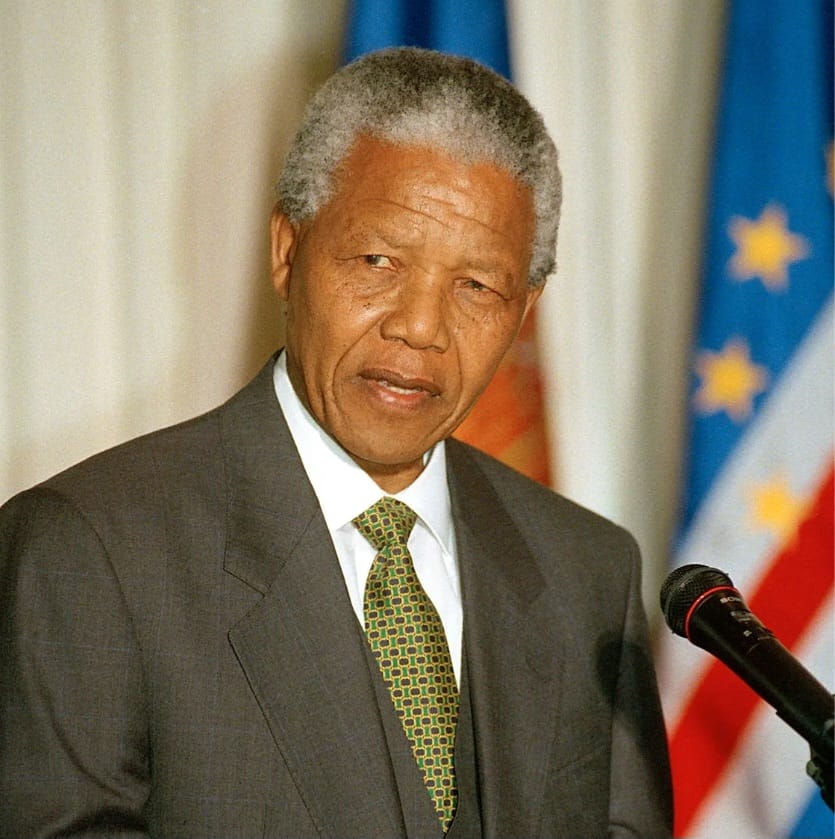

Md. Kamal Uddin:Today is July 18. It is the birthday of Nelson Mandela, a unique symbol of world humanity, a great ambassador of freedom and equality, and the undisputed leader of the struggle against apartheid. On this day, we remember with deep respect, gratitude and love the great man who dedicated his life to the liberation of oppressed people, the establishment of human rights and the creation of a just society. Nelson Mandela was not only a statesman of South Africa; he was the conscience of world humanity. He was a leader who changed history not through the politics of revenge, but through the politics of forgiveness and harmony. His life story is not just the history of the independence of a country, it is an epic of human liberation. Nelson Rolihlahla Mandela was born on July 18, 1918, in the village of Mbejo, South Africa. His father, Gadla Henry Mphakanisiwa, was the head of the Thembu tribe, and his mother, Nosekeni Fanny, was a devout and loving woman. In childhood, he was known as Rolihlahla. Later, a school teacher gave him the name “Nelson”, which was later written in golden letters in the pages of history. Mandela grew up in a society where the value of a person was determined by the color of his skin. Education, jobs, housing, voting rights and basic civil rights were limited for black people. This unfair discrimination deeply moved his tender mind. He realized that protesting against injustice was not just a right, but a moral responsibility. While studying at Fort Hare University, he met Oliver Tambor. Later, together they founded the first black legal advice center in South Africa. From there, a new chapter in the anti-apartheid movement began. Mandela gradually became the main face of the movement by joining the African National Congress (ANC). He saw that peaceful movements were being suppressed repeatedly. Therefore, in the context of the situation, he took the leadership of the armed wing of the organization, ‘Umkhanto We Sizwe’ or “Spear of the Nation”. But his goal was not violence; his goal was to establish human rights. After his arrest in 1962, he was tried on charges of treason and conspiracy. The speech he gave at the famous Rivonia Trial is still considered one of the greatest political speeches in the world. Standing in court, he said, “I dream of a democratic and free society where everyone will live with equal opportunity and dignity. I am ready to give my life for this ideal.” This speech changed the course of history. Mandela was sentenced to life imprisonment. A long 27-year prison life began. He spent day after day, year after year, in the small prison cell of Robben Island. Despite the hard labor, inhumane environment, and endless mental stress, he did not break down. The prison was able to imprison his body, but it could not imprison his thoughts, ideals, and dreams. Even in prison, he received education, practiced political philosophy, and inspired the movement’s activists. His autobiography Long Walk to Freedom later became a historical document of the freedom struggle. When he was released on February 11, 1990,The world was watching him. After 27 long years in prison, people thought he might call for revenge. But he surprised everyone by calling for forgiveness, harmony, and national unity.
He negotiated with the then President of South Africa, F. W. de Klerk, to end apartheid. With their joint efforts, South Africa moved towards democracy. For this outstanding contribution, they jointly received the Nobel Peace Prize in 1993. In 1994, for the first time in the history of South Africa, all citizens participated in elections with equal voting rights. In that election, the people elected Nelson Mandela as president by a huge vote. On May 10, 1994, he was sworn in as the first black president of South Africa. After coming to power, he did not engage in politics of revenge. He built bridges of unity, not division, between white and black people. A new constitution was formulated under his leadership, where democracy, human rights, the rule of law, equality and social justice were given utmost importance. Even after the end of his presidency, he continued to devote himself to human welfare. He played an important role in poverty alleviation, child rights, peacebuilding and raising awareness about AIDS. He also transformed the pain of losing his son to AIDS into the power of human service. There are very few people in the history of the world whose name brings to mind humanity, courage, sacrifice and forgiveness. Nelson Mandela is one of those rare people. He taught that true leadership is not born from the barrel of a gun; it is born from moral courage, truth and love for people. In recognition of his contribution, the United Nations has declared July 18 as “Nelson Mandela International Day”. Because Mandela was not just the leader of a nation, he was an asset to the entire humanity. As we remember him today on his birthday, it is necessary to learn from his ideals. Unity, not division; love, not hatred; forgiveness, not revenge – this was Mandela’s philosophy. His life and ideals have become even more relevant in the current era of conflict, discrimination and intolerance in the world. Nelson Mandela is no longer with us, but his struggle, philosophy and human values are still alive in the hearts of millions of people. As long as there is a struggle for freedom in the world, as long as there is protest against injustice, Nelson Mandela will live on in the hearts of people, in the pages of history and as an eternal beacon of humanity. Tribute to the great leader Nelson Mandela. Happy birthday, the great spirit of humanity. Your life is an eternal inspiration for us of courage, truth and freedom.