

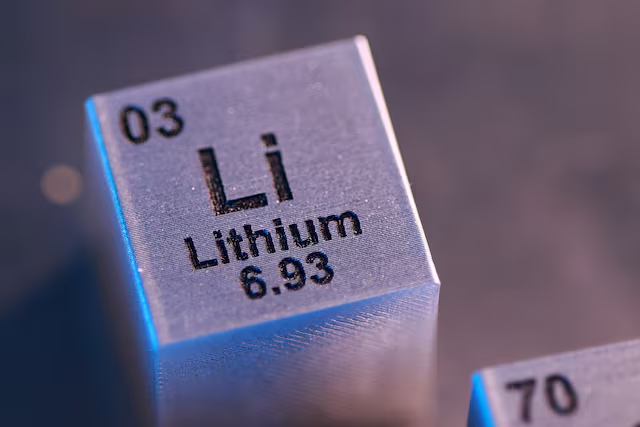

India is preparing to introduce incentives for companies to establish lithium and nickel processing facilities, aiming to expand domestic output and meet growing demand for critical minerals, according to two sources and a government presentation reviewed by Reuters.
The move is part of India’s broader push to accelerate its energy transition and cut emissions by supporting clean energy initiatives such as electric vehicles, even as the country currently lacks significant processing capacity for critical minerals—a sector dominated globally by China.
Lithium and nickel are essential components of India’s electric vehicle supply chain, particularly for battery production. New Delhi aims to raise electric vehicle penetration to 30% for passenger cars and 80% for two-wheelers by 2030, from about 4% and 6%, respectively.
Under the proposed scheme, eligible investments in lithium and nickel processing projects starting on or after April 1, 2026 would receive a capital subsidy of 15%, subject to an overall cap, according to the presentation. One source described the subsidy level as “realistic.”
India’s Ministry of Mines, which is overseeing the proposal, did not respond to a request for comment.
The incentives would be available for five years and would be capped at 40% of annual net sales turnover for lithium processing plants and 25% for nickel plants, the presentation showed.
To qualify, lithium processing facilities would need a minimum capacity of 30,000 metric tonnes, while nickel plants would require at least 50,000 tonnes. Subsidies would be disbursed in stages and linked to minimum utilisation thresholds set by the government.
Initially, the government plans to support two lithium and two nickel processing projects to help meet domestic demand by 2030, according to one of the sources and the presentation.
In 2023, India designated more than 20 minerals—including lithium—as “critical” to its energy transition strategy and to meeting rising demand from industry.