

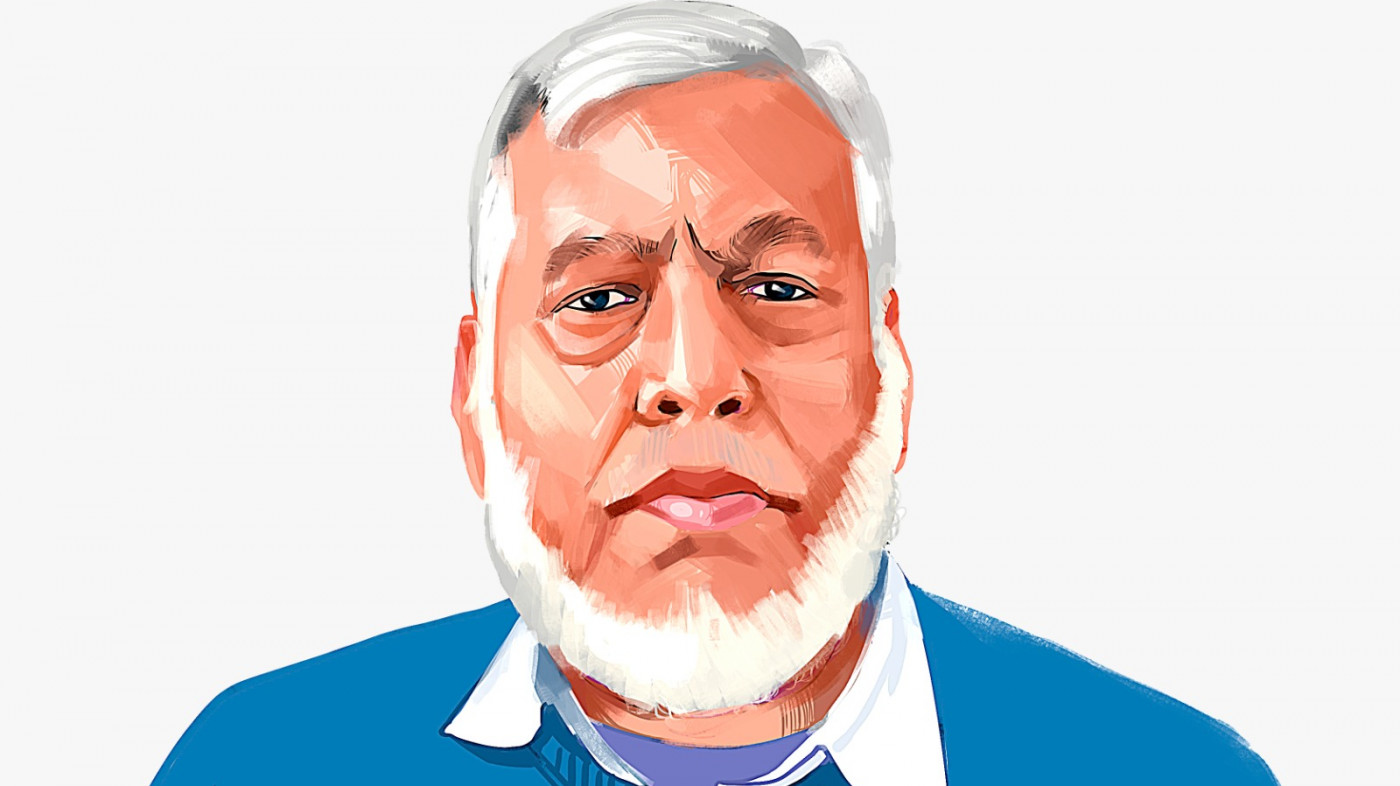

Power, Energy and Mineral Resources Adviser Muhammad Fouzul Kabir Khan offered a rare and candid assessment of Bangladesh’s political economy at the TBS Future Dialogue, arguing that inflation, energy shortages and economic instability are deeply rooted in political choices rather than short-term monetary mismanagement.
He said Bangladesh’s current challenges—high inflation, energy insecurity, foreign exchange stress and declining purchasing power—are the result of years of policy distortions, weakened institutions and political incentives that repeatedly overrode economic fundamentals. These problems, he stressed, did not emerge overnight.
Unless elections produce accountable leadership committed to economic rules rather than political convenience, inflationary pressure and energy insecurity will persist, regardless of temporary fixes, he warned.
In his book Bangladesher Rajnoitik Orthoniti (Bangladesh’s Political Economy), Fouzul Kabir describes the economy as “a betrayed lover that eventually turns vengeful.” The metaphor, he explained, reflects what happens when governments repeatedly violate core economic principles—market pricing, competition and fiscal discipline—for narrow political or personal gain.
“Politicians often believe they can control prices, cap interest rates, suppress exchange rates or expand public spending without consequences,” he said. “But these tools eventually stop working, and when they do, the economy responds in the opposite direction.”
Bangladesh’s experience with interest rate caps and exchange rate controls illustrates this pattern. Measures intended to stimulate investment instead encouraged capital flight, money laundering and reserve depletion. Artificially holding down the exchange rate benefited select groups in the short term but ultimately fueled import inflation and drained foreign reserves—costs borne largely by ordinary citizens.
Fouzul Kabir argued that inflation is not merely a monetary phenomenon but a political outcome. As the taka weakened and import costs rose, inflation accelerated—particularly for food and energy. Attempts to suppress prices without addressing underlying distortions only tightened supply constraints.
“The political class largely remains insulated,” he said, “while ordinary people pay the price through higher food and transport costs and shrinking real incomes.”
He described a self-reinforcing cycle: distorted exchange rates raise import costs; higher import costs drive inflation; inflation erodes purchasing power; and declining confidence leads to hoarding of dollars and essential goods.
Breaking this cycle, he said, requires restoring economic credibility through exchange rate flexibility, fiscal discipline and market-based pricing—especially in the energy sector.
According to the adviser, the energy sector best reflects Bangladesh’s governance failures. He strongly criticised the 2010 Quick Enhancement of Electricity and Energy Supply Act, which allowed procurement without competitive bidding and shielded contracts from judicial scrutiny.
“This law effectively suspended competition,” he said. “Procurement became a negotiated process protected from oversight, leading to massive rent extraction.”
Under the interim government, limited reforms have begun to reintroduce competition. Changes to fuel procurement expanded the supplier base and broke long-standing syndicates, reportedly cutting premiums by 35% and saving around Tk1,500 crore in six months.
“The lesson is clear—competition works,” he said, “but sustaining it requires political backing, something an interim government lacks by design.”
Fouzul Kabir repeatedly returned to the role of elections in shaping economic outcomes. He argued that the absence of checks and balances over the past decade enabled one-person dominance and one-party governance, weakening parliament, marginalising opposition voices and eroding accountability.
“When power is concentrated in one office, economic decisions become arbitrary,” he said. “Even routine administrative actions require top-level political instructions. That is not how a functioning economy works.”
He stressed that the upcoming election must restore institutional balance through meaningful parliamentary oversight, a stronger opposition and constitutional safeguards against unchecked executive authority. Without political reform, he warned, economic reform will remain fragile and reversible.
Bangladesh’s inflation challenge, he said, cannot be separated from its energy dependence. Domestic gas production is declining, LNG import capacity is near its ceiling and global volatility has exposed the risks of fossil fuel reliance.
Bangladesh can currently import a maximum of about 115 LNG cargoes annually, a limit that has effectively been reached. Future electricity demand growth cannot be met through LNG alone.
“This is no longer a choice; it is a compulsion,” he said. “Without scaling up renewable energy, load-shedding will worsen—even in winter.”
Despite years of discussion, renewables account for only 3–4% of Bangladesh’s power mix, far behind regional peers such as India, Sri Lanka and Pakistan.
The adviser was blunt about why renewable energy has lagged. “It is less profitable for rent-seeking networks,” he said. “Small rooftop solar projects don’t generate the kickbacks that mega power plants do.”
The interim government has begun mandating rooftop solar installations on government buildings and promoting net metering, allowing consumers to sell surplus electricity to the grid. However, resistance from vested interests remains strong.
“Renewables challenge the existing political economy of energy,” he said. “That is why mindset change matters as much as technology.”
On inflation management, Fouzul Kabir distinguished between technical measures and political will. Technically, exchange rate stabilisation, reserve rebuilding and coordinated monetary policy have begun to yield results, with inflation easing from double digits toward single-digit levels.
But he cautioned that these gains remain fragile and depend on policy continuity after the election.
“Economic stabilisation works with a lag,” he said. “The full impact will unfold over several quarters. Policy reversals would undo much of the progress.”
Politically, controlling inflation requires dismantling extortion networks embedded in supply chains—from wholesale markets to transport corridors—a task that demands broad political consensus.
Fouzul Kabir also questioned the economics of politics itself, asking how candidates with no declared profession or income finance election campaigns costing Tk5–8 crore per constituency.
“When politics becomes an investment, policy becomes extraction,” he said.
This dynamic, he argued, indirectly fuels inflation as politicians seek returns through regulatory capture, inflated contracts and informal taxation, pushing up costs across the economy.
Acknowledging the interim government’s limitations, Fouzul Kabir said its scope for deep reform is constrained. Still, he believes groundwork has been laid through energy and transport master plans, procurement reforms and renewed emphasis on accountability.
“The next government will not start from zero,” he said. “But whether it moves forward or slides back depends entirely on political will.”
Bangladesh stands at a crossroads. Inflation has begun to ease, reserves are stabilising and the exchange rate has found a tentative balance. Yet energy insecurity, fiscal pressure and institutional fragility remain unresolved.
The coming election, Fouzul Kabir argued, is not merely about leadership—it is about economic direction.
“If we return to rule-breaking economics, the economy will retaliate again,” he warned. “If we respect the rules, the benefits will compound—for inflation control, energy security and the lives of ordinary people.”
For voters facing rising living costs and energy uncertainty, his message was stark: economic stability is inseparable from political choice.