

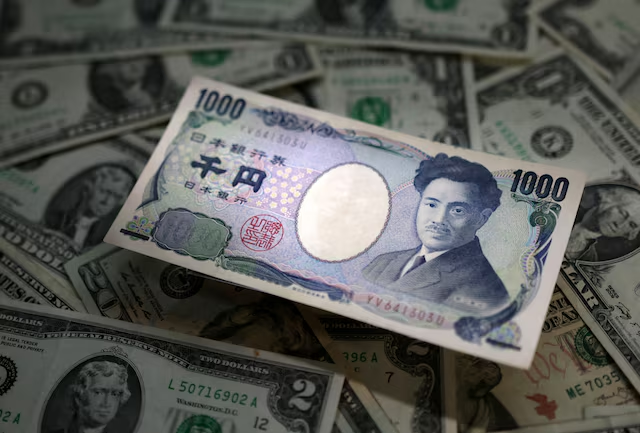

The Japanese yen is back in the spotlight as investors speculate about a possible joint U.S.-Japan currency intervention—the first in 15 years—though uncertainty remains over timing and method.
After Friday’s wild swings, the yen steadied on Monday, climbing to a four-month high of 153.81 per U.S. dollar from Friday’s low of 159.23. Sources told Reuters that the New York Federal Reserve contacted traders on Friday to monitor rates—a typical precursor to intervention—but markets have also focused on U.S.-Japan coordination, prompting broad dollar selling during Asian trading hours.
The sharp yen movement without confirmed intervention reflects investor caution and relatively light positioning, as traders may be unwinding short yen bets to avoid getting caught in potential market action. Japanese officials confirmed on Monday that they remain in close coordination with the U.S. on foreign exchange matters.
The yen’s strength has weighed on global markets, dragging the dollar lower and boosting some struggling Asian currencies, including the South Korean won. In Japan, the strong yen contributed to a roughly 2% drop in the Nikkei 225.
Safe-haven flows and a softer dollar have also lifted precious metals. Gold breached $5,000 per ounce for the first time, while silver surged over 4% to another record high.
Market attention is also on the Federal Reserve’s upcoming meeting later this week. The central bank is widely expected to hold rates steady, though concerns over central bank independence remain. President Donald Trump has repeatedly criticized Fed Chair Jerome Powell for not cutting rates more aggressively, and the Justice Department has reportedly threatened a criminal investigation into Powell over building renovations at the Fed’s new headquarters. Trump’s attempt to remove Fed Governor Lisa Cook is pending a Supreme Court hearing.
In corporate news, Ryanair’s (RYA.I) earnings report is in focus, amid an ongoing social-media feud between Elon Musk and Ryanair CEO Michael O’Leary.