

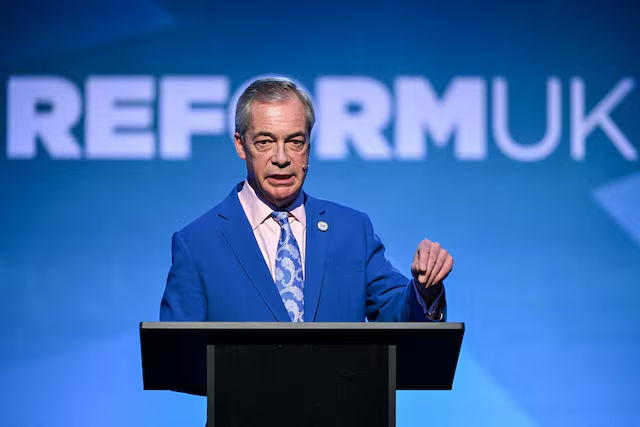

Nigel Farage has launched a sweeping political vision aimed at reshaping Britain’s future, declaring that the “old world is over” as he positions himself and his party, Reform UK, as challengers to the country’s traditional political order.
Speaking to Reuters, Farage said global political dynamics are shifting rapidly, arguing that the same populist momentum that drove the Brexit referendum could propel him to power, potentially reaching 10 Downing Street.
Reform UK is gaining ground in opinion polls, currently leading ahead of Prime Minister Keir Starmer’s governing Labour Party. With a general election due by 2029, Farage insists his party could form the next government despite its relatively small presence in parliament.
Farage’s policy agenda includes controversial proposals such as mass deportations, withdrawing from international human rights agreements, cutting overseas aid, and scrapping diversity and net-zero initiatives. He has also pledged to boost domestic oil and gas production, overhaul the civil service, and position Britain as a global cryptocurrency hub.
Drawing parallels with global populist leaders, Farage cited figures like Donald Trump, Viktor Orban, and Javier Milei as drivers of major political change. However, he rejected claims that his agenda mirrors the Trump administration, arguing instead that it is rooted in “simple values” of family, community, and country.
Critics, including both Labour and the opposition Conservatives, have questioned Reform’s readiness to govern, citing a lack of detailed policy and experience. Kemi Badenoch dismissed the party as “not serious,” while Labour officials argued its ideas lack coherence.
Political analysts note that Farage remains a deeply polarizing figure. According to Tim Bale, Farage’s strong appeal among loyal supporters is matched by widespread distrust among other voters, potentially limiting the party’s broader appeal.
Within Reform, advisers describe Farage as a leader driven more by instinct than ideology. James Orr, the party’s head of policy, highlighted his ability to connect with voters, while Alan Mendoza emphasized the need to move beyond what he called a fading “rules-based international order.”
Farage also pointed to his close ties with figures in Washington, suggesting these relationships could benefit Britain’s global standing. He said he shares common ground with Trump on issues such as border control, energy independence, and confronting geopolitical rivals like Iran and China.
Despite growing momentum and strong fundraising—boosted significantly by overseas donors—Reform faces a steep challenge in convincing voters it can transition from a protest movement into a governing force.