

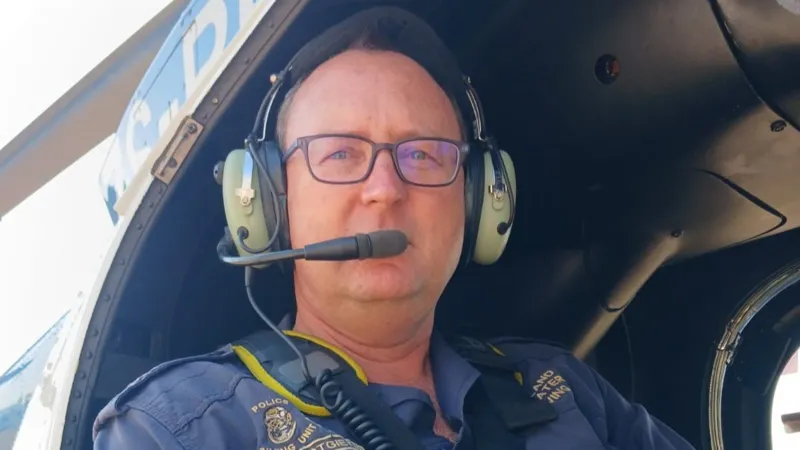

Captain Johan Potgieter said he was deployed after authorities suspected a large crocodile had attacked a man who was swept away while attempting to cross a flooded bridge over the Komati River last week.
“The crocodile was lying on an island, and there was no other way to reach it except from the air,” Potgieter told the BBC.
Search teams had used drones and helicopters to locate several crocodiles resting on a small island, identifying one as the prime suspect. The reptile, measuring approximately 4.5 metres (15 feet) and weighing around 500kg, was shot by officers before Potgieter was called in to assist with the recovery.
Despite initial assumptions that the animal was dead, it later moved, drifting upstream, adding to the danger of the mission. The river conditions, combined with the presence of other crocodiles, hippos, and submerged rocks, made any approach by boat impossible.
Potgieter, a veteran member of the South African Police Service diving unit, was then lowered by helicopter directly into the water. He said the noise and downdraft from the aircraft helped keep nearby crocodiles at bay.
“There was no way to communicate with the pilot once I was hanging there,” he explained. “I had to follow through with the plan—there was no turning back.”
The officer secured the crocodile with a rope, confirming it was dead only at that moment. “If it wasn’t, it would have attacked me,” he said.
Authorities later discovered human remains inside the animal, along with personal items. DNA testing is currently underway to confirm the identity of the victim.
South Africa’s acting police chief praised Potgieter’s “extraordinary bravery,” describing the operation as both complex and highly dangerous.
With 38 years of service, Potgieter said this was unlike any mission he had undertaken before. “This was definitely a first—and hopefully the last,” he noted.
He added that such risks are taken to provide closure for grieving families. “It’s never easy losing someone, and even harder when you don’t know what happened to them. Our goal is to help families find answers so they can move forward.”