


By Mohammad Kamal Uddin: The Rapid Action Battalion (RAB) has long been at the forefront of maintaining law and order, combating serious crimes, and tackling terrorism in Bangladesh. Following the growing deterioration of the country’s law enforcement situation after 2001, the government began considering the formation of an effective force. This led to the formal establishment of RAB in 2003 under the Armed Police Battalion (Amendment) Act 2003. Initially, there were proposals to name the force “Rapid Action Force” or “Rapid Action Team,” but the finalized name became Rapid Action Battalion, commonly known as RAB.
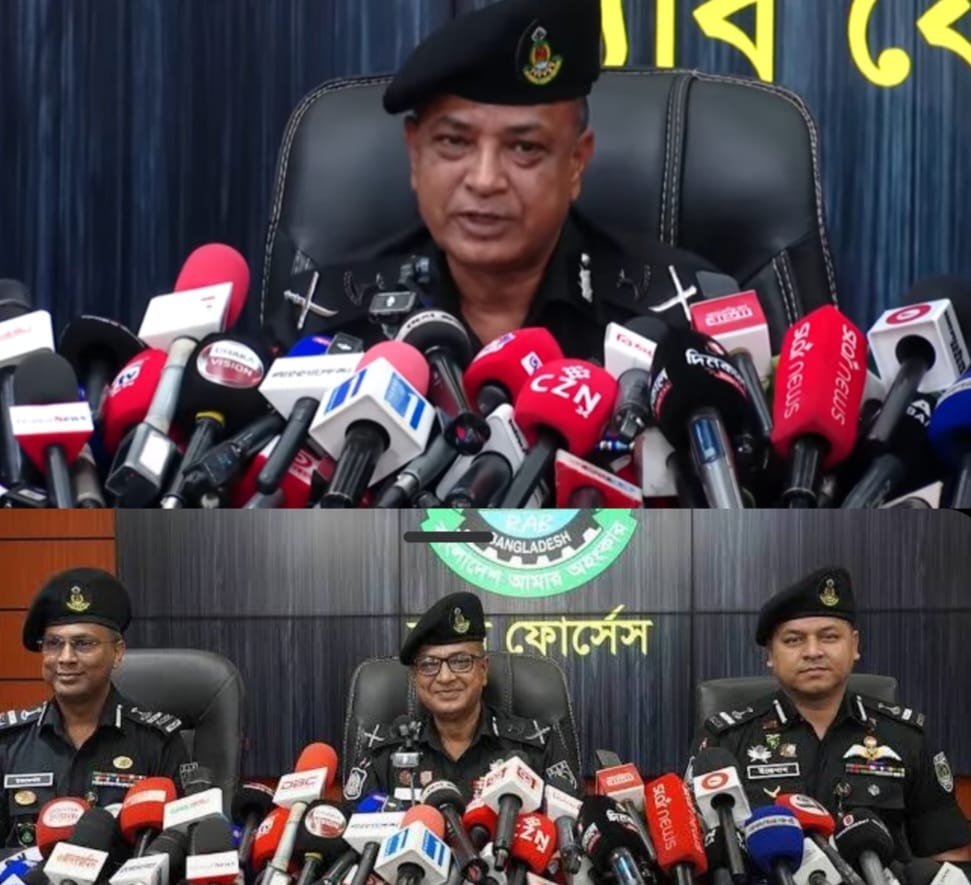
RAB’s structure integrates members from various law enforcement agencies. Legally, its responsibilities include internal security, intelligence gathering on crimes, recovery of illegal arms and ammunition, arrest of armed criminals, assisting other police units, and carrying out government-mandated operations. Investigating officers submit reports to the relevant police stations for legal proceedings, ensuring that RAB functions as a professional, independent, and influential entity. Recently, RAB’s new Director General, Ahsan Habib Polash, highlighted the organization’s operations during an interactive session. He emphasized that decisions regarding RAB’s future rest with the government, not the force itself. “Our main goal is to carry out our duties diligently and present RAB to the public with integrity. Any internal lapses are investigated internally—there are no exceptions,” he said.
Analyzing past operations, DG Polash noted that reviewing previous actions helps identify errors or deviations. “If we can address these areas, there will be no future restrictions,” he added. He also assured full cooperation with the International Crimes Tribunal in crossfire cases, providing all relevant information to support judicial proceedings. Responding to allegations of political misuse of RAB, he said, “Over the past one and a half years, especially during the previous government, RAB’s record of misconduct is minimal. This proves that RAB, when properly managed, can operate correctly. The current government is engaging RAB in the right tasks, and we are following those directives.” DG Polash stressed RAB’s vision for the future: “Our aim is to build RAB as a professional, humane, and technology-driven organization, capable of playing a highly responsible role for the nation.” On extremism and terrorism, he added, “We are working to eliminate all forms of radicalism and crime. Insha’Allah, we will succeed. RAB is also addressing separatist activities across the country and combating river piracy in the Sundarbans.” He highlighted RAB’s successes, including the arrests of top leaders of extremist groups like Jama’atul Mujahideen Bangladesh and Harakatul Jihad, and significant arms seizures from operations such as the one in a Qawmi madrasa in Bhola district. While acknowledging media allegations of extrajudicial killings, he clarified that many incidents involved crossfire or exchange-of-fire situations.
Regarding RAB’s structure and legal authority, DG Polash explained that RAB functions independently compared to other law enforcement units. Only RAB personnel can exercise its specific powers, which is essential for national and public security. “Our goal is to make RAB more professional and technology-driven, ensuring it plays a vital role in maintaining law and order in the future,” he stated. He further emphasized that RAB will operate with humanitarian and social responsibility, strengthening public engagement, respecting legal processes, and correcting internal weaknesses to establish RAB as a model law enforcement agency. “We want RAB to be not just a security force, but a symbol of public trust,” he said. Through internal reviews and coordination, the force identifies and addresses lapses, making RAB stronger, more accountable, and public welfare-oriented. DG Polash’s overarching vision is clear: to establish RAB as a reputable, professional, humane, and technologically advanced organization, indispensable to Bangladesh’s internal security and law enforcement framework.