

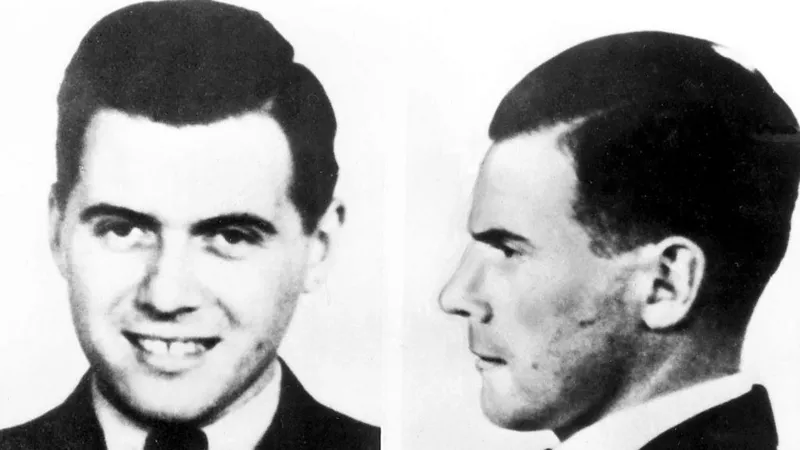

Swiss authorities have announced plans to open long-sealed intelligence files related to notorious Nazi war criminal Josef Mengele, raising fresh questions about whether he secretly returned to Switzerland while being hunted internationally after World War Two.
The Swiss Federal Intelligence Service confirmed that historians would finally be granted access to the files, though no official date for their release has yet been announced.
Mengele, often referred to as the “Angel of Death,” was a doctor at the Auschwitz extermination camp in Nazi-occupied Poland during World War Two. He became infamous for selecting prisoners for gas chambers and conducting brutal medical experiments on children and twins.
Following the collapse of Nazi Germany, Mengele fled Europe using false documents reportedly obtained through the Red Cross system in Italy before escaping to South America in 1949.
For decades, historians and researchers have suspected that Mengele may have secretly returned to Switzerland after an international arrest warrant was issued against him in 1959.
Swiss historian Regula Bochsler uncovered evidence suggesting Austrian intelligence warned Swiss authorities in 1961 that Mengele might be travelling under a false identity and could be present on Swiss territory.
At the same time, Mengele’s wife reportedly rented an apartment in Zurich and applied for permanent residency, fueling speculation that the fugitive Nazi may have been planning a return to Europe.
Police surveillance records reportedly showed the apartment was monitored by Zurich authorities, who observed Mrs. Mengele with an unidentified man. However, historians have never been able to confirm whether the man was Josef Mengele himself.
For years, Swiss authorities refused access to the intelligence documents, claiming national security concerns and privacy protections for the extended family. The files were originally sealed until 2071.
Historian Gérard Wettstein recently challenged the decision in court after being denied access in 2025. His legal campaign, supported through public crowdfunding, appears to have pressured authorities into reconsidering their stance.
Some historians believe the files may contain references to foreign intelligence agencies, including Israel’s Mossad, which actively hunted Nazi fugitives during the post-war period.
Others argue the prolonged secrecy reflects Switzerland’s complicated wartime legacy. Although officially neutral during World War Two, Switzerland has long faced criticism over its treatment of Jewish refugees and the role of Swiss banks in holding assets belonging to Holocaust victims.
Historian Jakob Tanner said the case highlights the ongoing tension in Switzerland between national security secrecy and historical transparency.
Mengele himself was never captured or tried for his crimes. He died in Brazil in 1979 under a false identity, and DNA testing in 1992 confirmed his remains.
Despite decades of rumours and investigations, historians still do not know whether the Nazi fugitive ever secretly returned to Switzerland while on the run.
Researchers now hope the newly opened files may finally provide clearer answers to one of the lingering mysteries surrounding one of history’s most infamous war criminals.