


—Md. Kamal Uddin
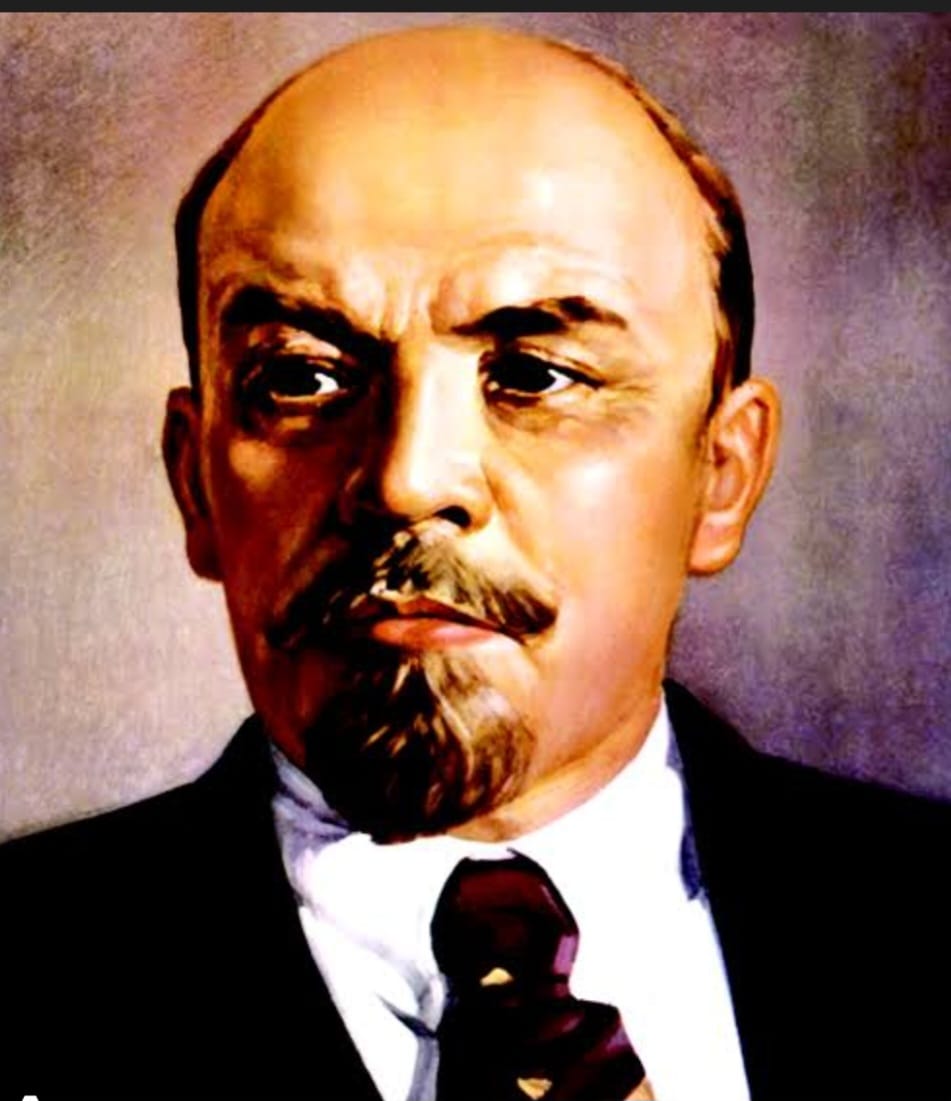
April 22 is not merely a date—it is a turning point in the course of history. On this day was born Vladimir Ilyich Lenin, a name that instantly evokes revolution, transformation, and the dream of a just and humane society free from exploitation.
Born in 1870 in the small town of Simbirsk in Tsarist Russia, Lenin—whose real name was Vladimir Ilyich Ulyanov—did not arrive in the world with the thunder of revolution. Yet, shaped by the forces of time, society, and history, he emerged as one of the most remarkable thinkers and organizers the world has ever known.
From an early age, he witnessed inequality, injustice, and state repression. He was raised in an educated family grounded in humanistic values—his father was an educator, and his mother a cultured and intellectual woman. However, the most defining moment of his youth came when his elder brother, Alexander, was executed for plotting against the Tsar. That tragedy ignited in Lenin the first spark of resistance.
Upon entering university, Lenin became actively involved in student movements. His expulsion from Kazan University and subsequent exile did not deter him; rather, they strengthened his resolve. Immersing himself deeply in the works of Karl Marx, he came to realize that theory alone could not transform society—only its practical application could reshape history.
From this realization, Lenin forged a new path—one where revolution was not merely an aspiration, but a disciplined and organized political endeavor. Through the Russian Revolution of 1917, he established the world’s first socialist state. This was not just a national transformation; it marked the beginning of a new era in global history.
Lenin’s greatest strength lay in his extraordinary ability to unite thought and action. He understood that history cannot be leaped over—it must be navigated through its own stages. Standing firmly within the realities of Russia, he developed a model of democratic revolution that later inspired movements in countries like China.
His analysis of the state was sharp and grounded. Lenin demonstrated that the state is not a neutral entity but an instrument of class domination, designed to protect the interests of the ruling class. This understanding was later deepened by thinkers like Antonio Gramsci and Michel Foucault. Yet, it was Lenin who provided a concrete roadmap for dismantling such structures of power.
He firmly believed that spontaneous uprisings alone are insufficient to overthrow a system. What is required is a well-organized revolutionary party, a clear ideology, and a disciplined political struggle. This concept became known as his theory of the “revolutionary party.”
Lenin’s life was a continuous poem of struggle. Under the brutal repression of the Tsarist regime, he lived as a prisoner, an exile, and a fugitive. Alongside his companion Nadezhda Krupskaya, he endured hardship but never ceased his work. He wrote extensively, published the newspaper Iskra, and tirelessly organized revolutionary forces.
During my own visit to Russia, I had the opportunity to explore places associated with Lenin’s legacy. Standing before the Lenin Library, I felt that it was not merely a library, but a vast intellectual reservoir of revolution. Every wall, every book seemed to echo the enduring presence of Lenin’s thought.
The October Revolution of 1917 brought forth a new dawn, the light of which has not faded even today. Though Lenin passed away in 1924, his ideas and vision remain alive and relevant.
Back in 1848, Marx had written, “A spectre is haunting Europe—the spectre of communism.” That spectre continues to exist—challenging injustice and inequality across time and space.
Today, on April 22, Lenin’s birthday, it becomes clear that this is not merely the birth anniversary of a man. It is the birth of a vision, the awakening of a struggle, the emergence of an enduring ideal.
As long as exploitation exists,
as long as injustice persists,
Lenin will return—
in new forms, new names, and new struggles.
Lenin is not confined to the pages of history.
He continues to question us,
to inspire us to think,
and to encourage us to fight.
On his birthday, we offer our deepest respect—
not only to a man,
but to an awakening.