
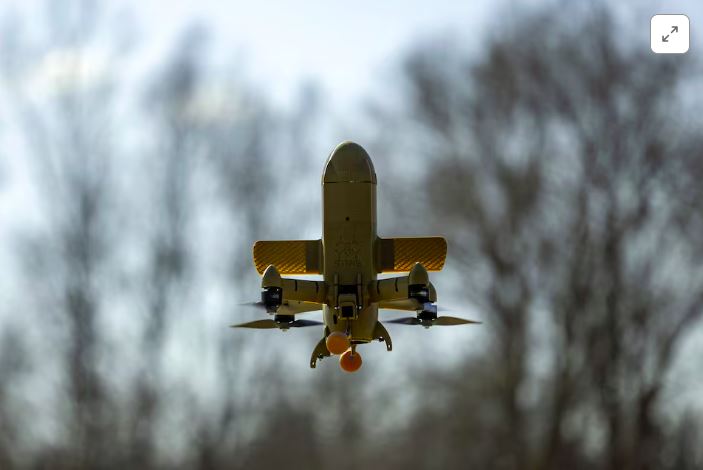

A Ukrainian-made interceptor drone, the STING, is emerging as a pivotal tool in defending against drone attacks, catching the attention of nations around the Gulf. Developed by private firm Wild Hornets, the quadcopter combines speed, agility, and affordability, offering a low-cost alternative to multi-million-dollar air-defence systems.
The STING, capable of reaching speeds up to 280 km/h (174 mph) with a flight range of approximately 37 km, has already intercepted more than 3,000 Russian Shahed drones since entering service in June 2025. Each unit costs around $2,000—far less than the $20,000–$50,000 price tag of the drones it counters. The drones are produced at a rate of over 10,000 units per month and are supplied through Ukraine’s defence-tech incubator and charitable organisations.
Test pilots say the STING is easy for operators familiar with first-person-view (FPV) drones, with training taking only a few days. A second-generation model, designed to intercept faster jet-powered Shaheds, has also been deployed, though technical specifications remain classified for security reasons.
The interest in Ukrainian interceptors comes as Gulf states face a surge of drone and missile attacks since the start of the Iran war on February 28. President Volodymyr Zelenskiy confirmed that Kyiv has dispatched three air-defence specialist teams to the region and is seeking financial and technological support in return for assistance.
While Middle Eastern clients have expressed interest, Wild Hornets says it is not negotiating exports without Kyiv’s approval. “We’ve received requests in our inbox, but we’re not reacting to them for now,” a company representative said. The firm remains focused on supporting Ukraine’s military, particularly as the country awaits additional U.S. Patriot missile systems.
The STING has proven effective on the battlefield, swerving at high speed to intercept incoming threats with explosive payloads. Its low cost, mass-production capacity, and adaptability highlight Ukraine’s innovative response to the overwhelming drone threats posed by Russia—and potentially Iran—in the future.