

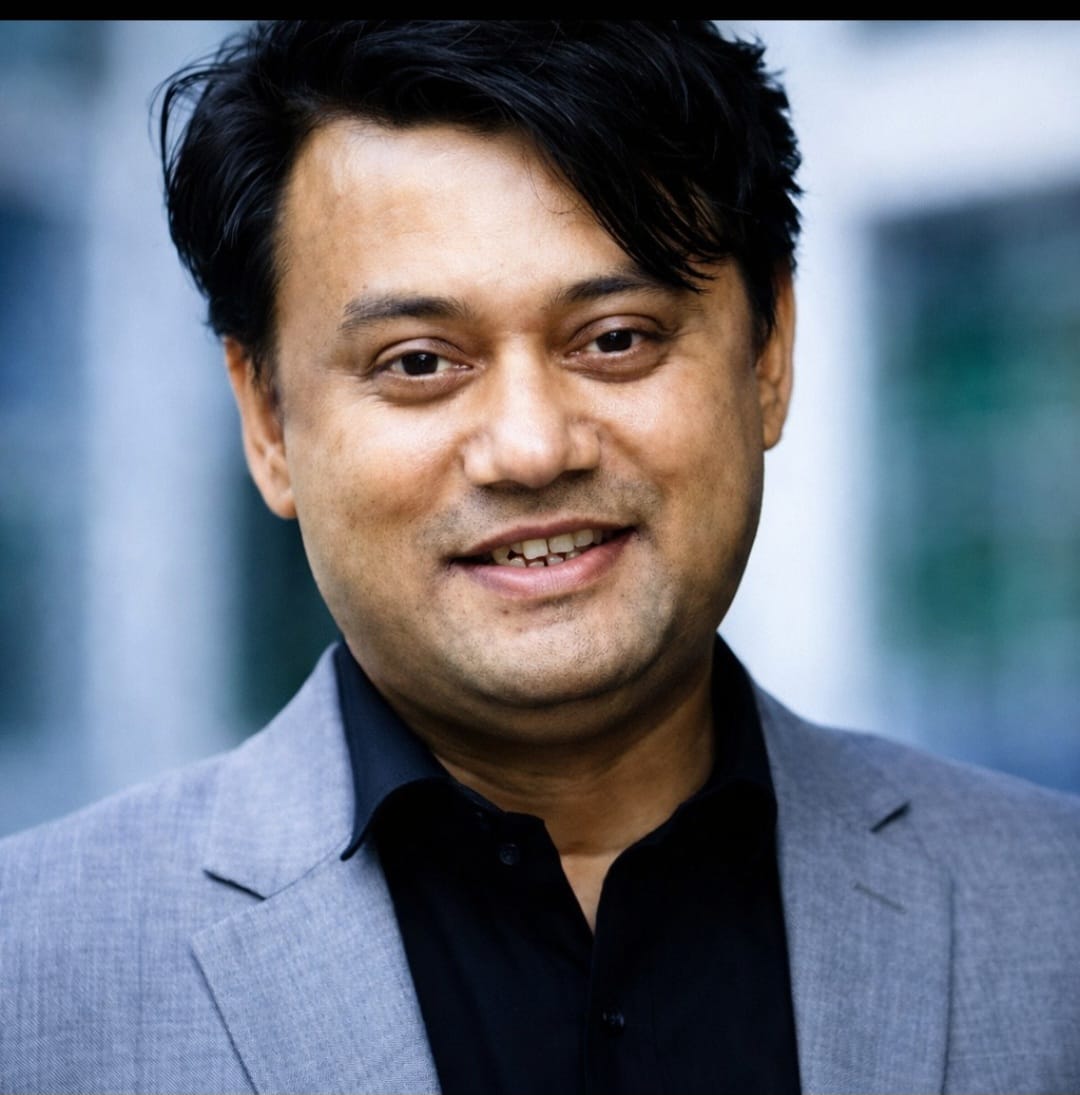

By Md. Kamal Uddin
The holy month of Ramadan is a time of spiritual reflection, restraint, and brotherhood. After a long day of fasting, when the golden light of sunset spreads across the sky, people gather around one table to share iftar. It is not only a sharing of food, but also a sharing of hearts.
For the journalism community in Chattogram, this Ramadan will be remembered for one such remarkable evening. The iftar gathering organized jointly by the main committee of the Chattogram Press Club and the Chattogram Union of Journalists at the International Convention Hall was not merely a religious ritual; it stood as a powerful symbol of unity, solidarity, and professional bonding among journalists.
At the center of much of the discussion surrounding this event was a well-known figure in Chattogram’s media community—Riaz Haidar Chowdhury. In the history of journalism in Chattogram, he is not just a journalist; he has long played an active role in defending journalists’ rights, dignity, and professional respect. As a result, discussions, criticisms, and even controversies have often revolved around him.
In the days leading up to the iftar gathering, certain groups attempted to create confusion, misinformation, and even intimidation around the event. Efforts were reportedly made to create a situation where Riaz Haidar Chowdhury would refrain from attending the program and divisions could be created within the journalists’ community.
The warmth, smiles, and camaraderie visible among the journalists present inside the International Convention Hall made it clear that the mainstream journalists of Chattogram remain united. The gathering itself appeared to be a silent declaration that propaganda cannot divide the journalism community.
In recent times, however, a troubling trend has emerged. Some self-styled individuals claiming to be journalists appear eager to create unnecessary controversies simply to draw attention. Sometimes it comes in the form of displays of power; at other times it takes the shape of targeted remarks on social media. Such behavior undermines the dignity of journalism.
When I wrote about Riaz Haidar Chowdhury, some individuals reacted with unusual restlessness and began questioning why I had written about him. To answer that question, it is necessary to go back a little in history.
My relationship with Riaz Haidar Chowdhury did not begin today. We have known each other since 1992. Since then, we have walked together through different chapters of journalism and civic activism.
In 1994, we published an exceptional magazine from Chattogram titled Chattrol Chitra. It was among the early four-color crime and political magazines in the region. The editor was freedom fighter-researcher journalist Jamal Uddin, while I served as executive editor. Through the magazine, we highlighted the darker sides of society, stories from the world of crime, and various dimensions of political realities.
During that time, Riaz Haidar Chowdhury and Mohsin Kazi were regular contributors. I still remember the joy we shared while celebrating the publication of the first issue together over a table of Mughal biryani.
Beyond journalism, our relationship grew stronger through civic movements. Under the leadership of S.M. Jamal Uddin in the Greater Chattogram Development Struggle Committee and under Barrister Monowar Hossain in the Chattogram Citizens’ Forum, we took part in movements demanding solutions to waterlogging and the construction of the Kalurghat Bridge. Those movements represented the struggle for the rights of the people of Chattogram.
Another point should be clarified here—Riaz Haidar Chowdhury is not only a colleague in activism; he is also a close relative of mine. Because of this long relationship, shared struggles, and journalistic experiences, I have written about him many times in the past—and I continue to do so today.
Journalism is not merely about writing news; it is also about preserving the testimony of history.
At present, journalism in the country is undergoing a transformation, and that wave of change has reached Chattogram as well. For a long time, certain groups attempted to establish a form of dominance over journalism, as if they alone held the authority to decide who qualifies as a journalist.
In their view, only members of the press club were journalists, while others were somehow less legitimate.
But the truth is simple: journalism is not defined by club membership. It is defined by honesty, courage, and the strength of the pen.
Today, grassroots working journalists are speaking out against that inequality. They are demanding their rights and professional dignity. I consider myself a fellow traveler in that movement, because as a soldier of the pen, my position against discrimination has always been clear.
I began writing in 1988 and have been associated with journalism for more than three decades. I started with magazine writing and later entered investigative journalism.
Over the years I have worked with numerous publications, including Daily Khobor, Chitra Bangla, Bortoman DinKal, Chhaya Chand, and many others. I have also written regular columns in Daily Purbokone and Daily Azadi, as well as several national newspapers including Daily Eshan, Naya Bangla, and Suprabhat Bangladesh.
I conducted investigative crime reporting for the magazine Aparadh Jagat and have been publishing the weekly Somoyer Alo since 2006, which is known for fact-based journalism.
In 2017, I began hosting the talk show Chattogram Dialogue on Bangla TV. I also presented magazine programs such as Sachitra Chattogram, Kichu Kotha Kichu Gaan, and Kothar Kotha for several years.
Alongside writing, reading has been one of my lifelong pursuits. I have read more than fifty thousand books from home and abroad and collected books from numerous libraries across Bangladesh. From this passion for reading emerged my journey as an author.
My first book, Banka Kotha, was published in 2008. Since then, I have written around 32 books. I am also a member of PEN International, the global association of writers. I have traveled to several countries and had the rare experience of interviewing seven Nobel laureate authors. In 2004, I also conducted a rare exclusive interview with Saudi Princess Suraiya at the Sheraton Hotel in Qatar.
The purpose of sharing this journey is not pride, but to remind a simple truth: the dignity of journalism comes from dedication, experience, and the courage to stand beside people.
I have seen many renowned journalists around the world. Yet I have rarely seen arrogance among them. The greater the journalist, the greater their humility.
Unfortunately, in our society some people forget this and find joy in criticizing others. They forget that the true strength of journalism lies not in titles or positions, but in the power of the pen.
Being a member of a press club is not the most important thing. What matters is being a journalist with a large heart and strong integrity.
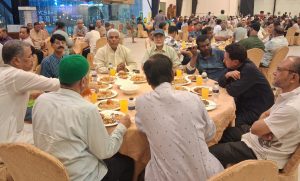 The iftar gathering brought that truth into focus once again. The atmosphere of friendship and solidarity witnessed around the table demonstrated that mainstream journalists in Chattogram remain united.
Propaganda, threats, or confusion cannot break that unity.
Because history ultimately stands with the truth—and those who raise their pens in defense of that truth are the ones whose names history remembers.