
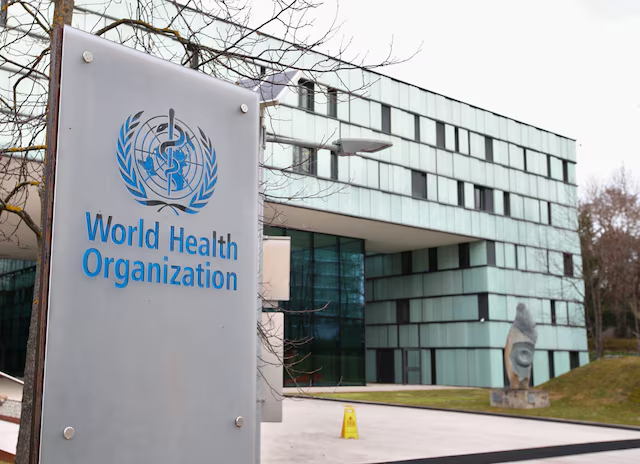

The United States is scheduled to officially withdraw from the World Health Organization on Thursday, despite warnings that the move could harm both U.S. and global public health and may violate U.S. law requiring Washington to pay roughly $260 million in outstanding dues to the U.N. health agency.
President Donald Trump announced the decision to leave the WHO on the first day of his presidency in 2025 through an executive order. Under U.S. law, the country must provide one year’s notice and settle all unpaid contributions before formally exiting the organization.
A U.S. State Department spokesperson said on Thursday that the WHO’s failure to contain, manage, and share information had cost the United States trillions of dollars. The spokesperson added that the president had exercised his authority to suspend any future transfer of U.S. government funding, support, or resources to the WHO.
“The American people have paid more than enough to this organization, and this financial impact goes well beyond any down payment on obligations owed,” the spokesperson said in an emailed statement.
Quick Return Unlikely
Over the past year, many global health experts have urged Washington to reconsider, including WHO Director-General Tedros Adhanom Ghebreyesus.
“I hope the U.S. will reconsider and rejoin the WHO,” Tedros said at a press conference earlier this month. “Withdrawing from the WHO is a loss for the United States and a loss for the rest of the world.”
The WHO has said the United States has not yet paid its assessed contributions for 2024 and 2025. Member states are expected to discuss the U.S. withdrawal and its implications at the WHO’s executive board meeting in February, according to a WHO spokesperson.
“This is a clear violation of U.S. law,” said Lawrence Gostin, founding director of the O’Neill Institute for Global Health Law at Georgetown University. “But Trump is highly likely to get away with it.”
Speaking to Reuters at the World Economic Forum in Davos, Bill Gates, chair of the Gates Foundation and a major funder of global health initiatives, said he did not expect the United States to reverse its decision in the near term.
“I don’t think the U.S. will be coming back to the WHO anytime soon,” Gates said, adding that he would continue to advocate for rejoining the organization. “The world needs the World Health Organization.”
Impact of the Withdrawal
For the WHO, the U.S. departure has triggered a significant budget crisis, forcing the agency to halve its management team, scale back programs, and reduce spending across departments. The United States has traditionally been the organization’s largest single contributor, accounting for about 18% of its total funding. The WHO is also expected to cut roughly a quarter of its workforce by mid-year.
The agency said it has continued to share information and coordinate with U.S. authorities over the past year, though it remains unclear how cooperation will proceed after the withdrawal.
Global health experts warn the decision could have serious consequences.
“The U.S. withdrawal from the WHO risks weakening the global systems and partnerships that help detect, prevent, and respond to health threats,” said Kelly Henning, public health program lead at Bloomberg Philanthropies.