


The White House has asked several federal agencies to intensify efforts to address rising energy prices linked to the ongoing conflict with Iran, signaling concerns that existing measures may not be sufficient, according to two sources familiar with the discussions.
Senior officials have requested the Departments of Energy, Transportation and Treasury, along with the Environmental Protection Agency, to present additional policy options. The focus is on steps that President Donald Trump could implement without needing approval from Congress, one of the sources told Reuters.
The move suggests the administration is preparing for the possibility that more aggressive action may be required if oil and gas prices continue to rise. Political analysts warn that higher gasoline prices could hurt Trump and the Republican Party in November’s midterm elections, when control of Congress will be contested.
White House spokesperson Taylor Rogers said the administration is already coordinating closely across agencies on the issue.
“President Trump and his energy team have had a strong strategy to keep oil prices stable even before Operation Epic Fury began, and they will continue reviewing all credible options and implementing them when appropriate,” Rogers said in a statement.
Global and U.S. crude oil futures climbed above $90 per barrel on Friday, with U.S. prices jumping more than 12% as Middle East supply remains constrained. The situation has been worsened by the effective closure of the Strait of Hormuz amid the expanding U.S.-Israeli conflict with Iran.
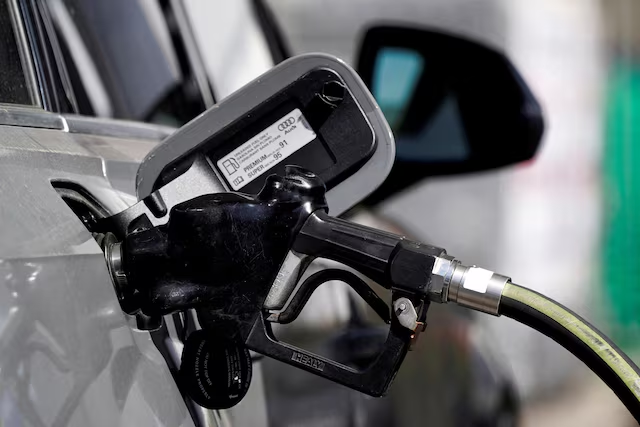
Fuel prices in the United States have risen sharply in recent weeks. The national average price for regular gasoline has exceeded $3.30 per gallon, while diesel prices have climbed to about $4.26 per gallon—levels not seen since late 2024.
So far, the White House has taken a cautious approach to intervening in energy markets, concerned that overly aggressive policies could backfire. Officials say any large-scale measures must be carefully designed, as actions that fail to reduce prices could unsettle markets, damage investor confidence and create political backlash.
Experts have also questioned how much influence the administration can realistically have over global energy prices.
Officials are reportedly reviewing a range of potential options. These include a temporary suspension of the federal gasoline tax and easing environmental regulations on summer gasoline blends to allow higher ethanol content.
The Treasury Department is also considering a strategy involving the oil futures market, although there are currently no immediate plans to announce such a move.
Earlier this week, President Trump directed the U.S. International Development Finance Corporation to provide insurance coverage for losses linked to political instability or conflict affecting maritime trade in the Gulf region. The order came after tanker traffic carrying oil and liquefied natural gas slowed significantly in the Strait of Hormuz, a key passageway for about 20% of the world’s daily oil supply.
Financial markets reacted cautiously to the plan, with analysts questioning whether financial guarantees alone would be enough to offset the operational and security risks created by escalating tensions in the region.
On Friday, the administration announced an additional measure to strengthen confidence among energy shippers, offering reinsurance coverage of up to $20 billion for potential losses in the Gulf region during the conflict with Iran.