

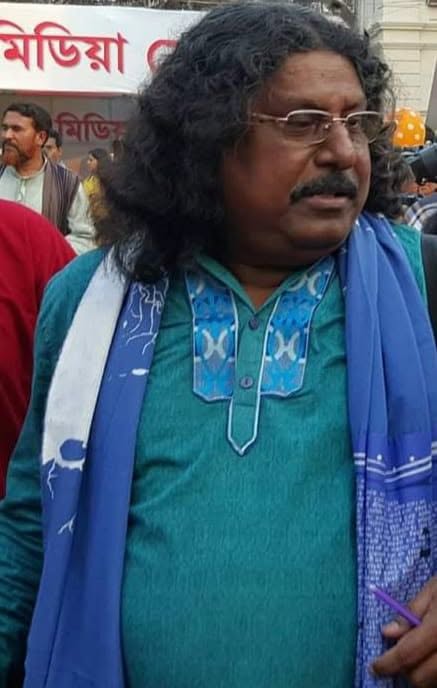

In memory of the heroic freedom fighter and folk singer Fakir Alamgir on his 5th death anniversary – “Song is never just a melody; sometimes it is a language of protest, sometimes an oath of independence, and sometimes an expression of a nation’s identity.” One of those who proved this truth with their lives was the heroic freedom fighter and folk singer Fakir Alamgir. Today is his 5th death anniversary. I remember this legendary artist with deep respect, genuine love and gratitude, who captured the soil of Bangladesh, the struggle of the people and the spirit of the great liberation war in his voice. Fakir Alamgir was born in Faridpur district on February 21, 1950. His birth on this day, which is intertwined with the memories of the language movement, seemed to carry the message of the arrival of a future cultural fighter. From his student life, he joined the progressive cultural movement and actively participated in the great liberation war. Inspired by the spirit of the Independent Bangla Radio Center, he made music one of the most powerful weapons in the liberation struggle. After independence, he took folk music to new heights. His voice conveyed the words of farmers, workers, the dreams of hardworking people, the cries of the deprived people, and the conviction to build a just society. He never praised power, but stood for truth, justice, and human rights. His songs, including “O Sakhina…”, “Mimamsa,” and “Sab Sakhire Par Karite…”, are still immortal in the hearts of people. His voice created a unique blend of folk music, folk music, and patriotic songs. He proved that songs are not just entertainment; songs are the conscience of a nation, the protest of a society, and the language of people’s liberation. Fakir Alamgir has led the Bangladesh Gana Shilpi Sangstha for a long time. In addition, he also played an important role as a writer, columnist, presenter, and cultural organizer. He has presented Bangladesh’s folk music with dignity in various cultural arenas at home and abroad. In recognition of his outstanding contribution, the Bangladesh government awarded him the Ekushey Padak. This honor was not just for an artist; it was also a recognition of mass music, the spirit of the Liberation War, and the cultural struggle. He breathed his last on July 23, 2021, infected with the coronavirus. With his departure, the cultural arena of Bangladesh lost a brave vocal soldier. But a true artist does not die. He lives on in his creations, ideals, and the love of people. Today, five years after his death, when injustice, discrimination, intolerance, and the crisis of human values are still affecting our society, Fakir Alamgir’s songs become even more relevant. Let his voice remind us that patriotism is not just words; it is the courage to stand by the people, speak for the truth, and protest against injustice. If we really want to pay tribute to him, it is not just with flowers; it is possible to pay true respect to him by embracing his ideals, nurturing the spirit of the Liberation War, and playing our part in building a non-communal Bangladesh. On the 5th death anniversary, I pay my humble respects to this great freedom fighter, pioneer of popular music, and artist of the masses. May Almighty Allah grant his soul forgiveness and grant him a high status in Jannatul Firdous.
As long as Bangladesh exists, Fakir Alamgir’s name will be spoken with respect and glory in the history of the Liberation War, in the genre of mass music, and in the struggle for the establishment of human rights. His voice has stopped, but his songs still live on as the heartbeat of Bangladesh. In tribute—
Md. Kamal Uddin