
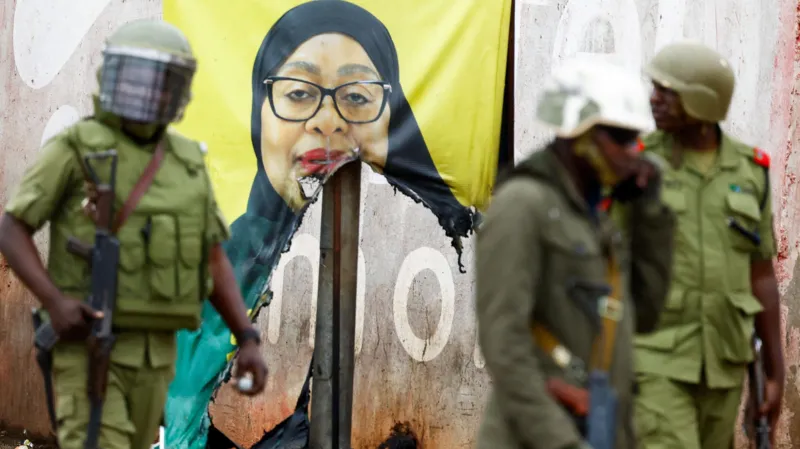


A total of 518 people died in Tanzania from “unnatural causes” following violent protests triggered by last year’s general election, according to a commission of inquiry set up to investigate the unrest.
Commission chairman Mohamed Chande Othman said the deaths occurred in the aftermath of widespread demonstrations but did not assign responsibility, recommending further investigations into the incidents.
Opposition parties and human rights organisations have previously accused security forces of carrying out a harsh crackdown on anti-government protesters. However, President Samia Suluhu Hassan defended the actions of security agencies, saying they helped prevent the country from descending into chaos.
She also stated that the violence was “planned, coordinated, financed and executed” by organised groups aiming to destabilise the state, adding that those responsible would be held accountable.
President Hassan was declared winner of the 29 October election with 98% of the vote, a result the opposition described as undemocratic. The government insisted the election was fair, while international observers, including the African Union and SADC, raised concerns about transparency and compliance with democratic standards.
Following the vote, protests erupted in Dar es Salaam and quickly spread nationwide, led largely by young people frustrated with what they view as long-standing one-party dominance since independence.
BBC-verified footage from the period showed police firing tear gas and live ammunition at demonstrators, with widespread chaos reported in several cities.
The inquiry reported that among the 518 dead were 490 men, 21 children, and 16 security personnel. It also said more than 2,000 people were injured.
Dar es Salaam recorded the highest number of deaths at 182, followed by Mwanza with 90 fatalities. The commission added that the true death toll could be higher, as some burials were not officially recorded.
Opposition groups and religious organisations have claimed the death toll may run into the thousands, including allegations of mass graves. However, the commission said such claims could not be substantiated and suggested some images circulating online may have been manipulated using artificial intelligence.
The main opposition party, Chadema, dismissed the report as a “cover-up” and accused the government of attempting to whitewash state responsibility.
Critics also questioned the independence of the nine-member commission, which was appointed by the president, arguing it could not impartially investigate government actions.
The report cited multiple factors behind the unrest, including unemployment, political grievances, demands for reform, and declining civic trust. It also said some politicians and activists encouraged participation in protests.
The commission concluded that the demonstrations were not peaceful or lawful and therefore not protected under law.
It recommended free medical care and psychological support for victims, a national day of mourning, and the establishment of a criminal investigation body to determine accountability.
It also proposed constitutional reforms by 2028 and the creation of a reconciliation commission aimed at addressing long-term political tensions.