

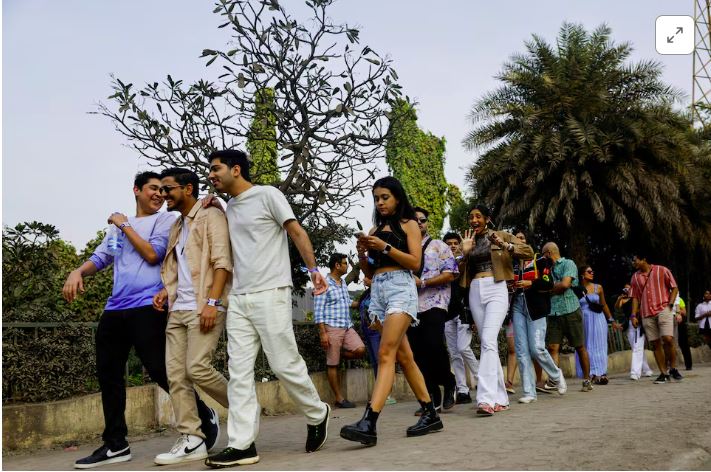

India’s hotel industry is riding a surge in live entertainment and sporting events, as younger consumers increasingly prioritise experiences over traditional big-ticket purchases, industry executives say.
International music concerts and marquee sports fixtures are emerging as key growth drivers for hotels, helping offset softer corporate travel demand — particularly from the IT services sector, where companies have tightened spending.
“We are now in the economy of experiences,” said Alan Watts, president of Hilton’s Asia Pacific business.
Major international acts are increasingly adding India to their tour schedules. Pop star Dua Lipa and rapper Ye are among the global performers drawing large crowds — and filling hotel rooms in host cities.
A standout example was Coldplay’s concert in Ahmedabad last year, which attracted tens of thousands of fans. Industry data showed the event became the city’s busiest day for metro traffic and air arrivals, generating an estimated $70 million in economic gains.
“Coldplay has changed the game by coming to India,” said Vijay Dewan, managing director of Apeejay Surrendra Park Hotels. “Concerts are going to be very helpful in terms of improving occupancies.”
The broader momentum reflects rapid growth in India’s live events sector. The country’s $5.69 billion event and exhibition market is projected to expand to $9.04 billion by 2031, according to industry estimates.
Hotels are adapting their strategies accordingly. Lemon Tree Hotels, one of India’s largest mid-priced hotel chains, is placing greater emphasis on proximity to concert venues and stadiums when scouting new properties.
“It will increasingly become important for everybody in the hotel industry,” said Lemon Tree CEO Neelendra Singh.
Beyond music, India’s deep-rooted passion for cricket continues to generate sharp, multi-day spikes in hotel demand. Whenever a major match takes place — particularly in cities like Ahmedabad — occupancy levels jump dramatically.
“The spike is phenomenal,” said Nikhil Sharma, managing director and operating chief for South Asia at Radisson Hotel Group.
However, some executives caution that isolated mega-events are not enough to transform long-term profitability.
“You need sustained event programming through the year for it to have meaningful impact to the bottom line,” said Arjun Baljee, president of Royal Orchid Hotels.
The shift underscores a broader generational change in spending habits. As young Indians allocate more of their disposable income to concerts, festivals and sporting spectacles, hotels are increasingly aligning their expansion and marketing strategies with the experience-driven economy.
With global entertainers and high-profile sporting tournaments becoming regular fixtures, industry leaders believe live events could remain a reliable tailwind for India’s hospitality sector in the years ahead.