

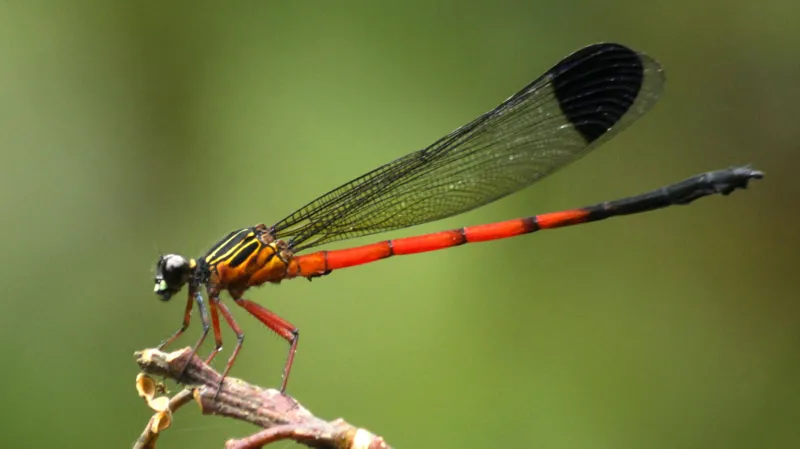

A groundbreaking study on dragonflies and damselflies in India’s Western Ghats—one of the world’s most significant biodiversity hotspots—has revealed both remarkable diversity and growing ecological concern.
The two-year study (2021–2023), funded by India’s Department of Science and Technology and conducted across five states, identified 143 species of dragonflies and damselflies in the Western Ghats. Of these, at least 40 species are endemic, meaning they are found nowhere else on Earth.
However, researchers also uncovered a worrying trend. At least 79 species previously recorded in the region were not observed during the survey, suggesting a potential decline of nearly 35% in documented species presence.
Lead researcher and evolutionary ecologist Pankaj Koparde said the missing species could be extremely rare or seasonal and may have been overlooked. However, he also warned that the findings could indicate a genuine loss of biodiversity, including possible local extinctions.
“Dragonflies and damselflies are good indicators of the health of a region. When their numbers drop, it could signal ecosystem degradation,” Koparde explained.
The Western Ghats, a UNESCO World Heritage Site stretching 1,600 kilometres along India’s western coast, is home to more than 30% of the country’s plant and animal species and at least 325 globally threatened species. The region is also rich in endemic wildlife, which plays a crucial role in maintaining ecological balance.
Despite its importance, the region faces mounting environmental pressures. The International Union for Conservation of Nature (IUCN) has described the Western Ghats as an area of “significant concern” in its 2025 assessment, citing urbanisation, agricultural expansion, infrastructure development, mining, invasive species, and livestock grazing as major threats.
Recent studies have highlighted the severity of the situation. In 2025, researchers reported the disappearance of rare galaxy frogs after habitat disturbance caused by human activity. A 2024 study found farming practices threatening local frog populations, while a 2023 bird survey recorded a 75% decline in 12 endemic bird species.
Koparde said long-term monitoring is essential, noting that dragonflies and damselflies had not previously been systematically documented in the region.
To conduct the research, scientists trekked through remote forests, riverbanks, and mangrove swamps, often beginning fieldwork at dawn. The team documented, collected, and studied insect species in challenging terrain over multiple seasons.
Their efforts led to the discovery of seven previously unknown species of dragonflies and damselflies. One was named Protosticta armageddonia, referencing “ecological armageddon,” a term used to describe the global decline in insect populations.
The researchers are now building a genetic database of all recorded species to better understand their origins and evolutionary history.
Koparde noted that the Western Ghats, believed to be around 150 million years old and older than the Himalayas, may contain species with evolutionary roots tracing back to the ancient Gondwana supercontinent.
As scientists continue to piece together the region’s ecological history, the findings serve as both a scientific breakthrough and a warning about the fragile future of one of the world’s richest natural habitats.