

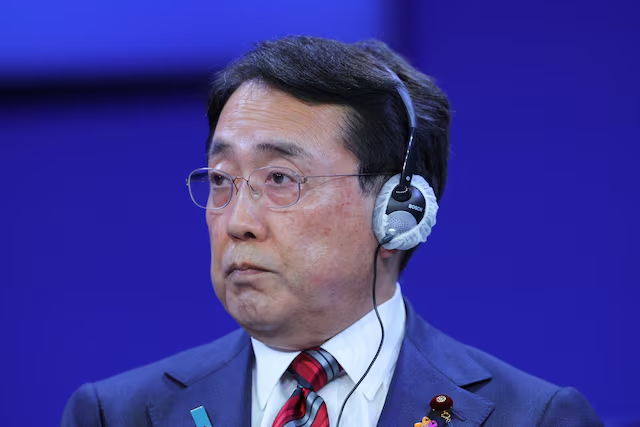

Europe repaid Japan a favour by agreeing to a joint release of oil stockpiles this week, aimed at easing supply shortages and curbing soaring prices caused by the conflict involving Iran, Japan’s Industry Minister Ryosei Akazawa said on Saturday.
The International Energy Agency announced on Wednesday a record release of 400 million barrels from strategic reserves to help stabilize global crude markets after the February 28 outbreak of the U.S.-Israeli war with Iran. As part of the initiative, G7 member Japan—which depends on the Middle East for nearly 90% of its oil supplies—plans to release about 80 million barrels from national and private reserves starting March 16.
Speaking on the sidelines of the Indo-Pacific Energy Security Ministerial and Business Forum in Tokyo, Akazawa said Japan influenced European leaders who were initially cautious due to their smaller dependency on the Strait of Hormuz.
“We understand that this is Europe’s return of the favour for when Japan released oil to help Europe during the Ukraine crisis in 2022,” he said, referring to the supply disruptions and price spikes after Russia’s invasion of Ukraine.
Since then, Japan has stopped purchasing oil from Russia and boosted liquefied natural gas imports from the United States, which now account for around 6% of Japan’s total LNG imports. Japanese companies are also exploring investments in U.S. energy, including possible participation in the $44 billion Alaska LNG project and nuclear power collaboration.
Over the weekend, U.S. energy and industrial officials attended the inaugural Indo-Pacific Energy Ministerial, organized under the “National Energy Dominance Council” to encourage energy investments in Japan and Asia.
“Whether it’s a geographic strait in the Middle East or control of supply, we need reliable, affordable, and secure energy from partners we trust,” said U.S. Interior Secretary Doug Burgum. “We have effectively displaced two-thirds of Russian gas in Western Europe and are ensuring freedom of navigation and stable supplies.”
This coordinated release is expected to ease short-term price pressures while strengthening energy cooperation between Japan, Europe, and the United States.