


Governments around the world are rolling out emergency measures to protect households and stabilize markets as surging global oil and gas prices threaten to push inflation higher and strain family budgets.
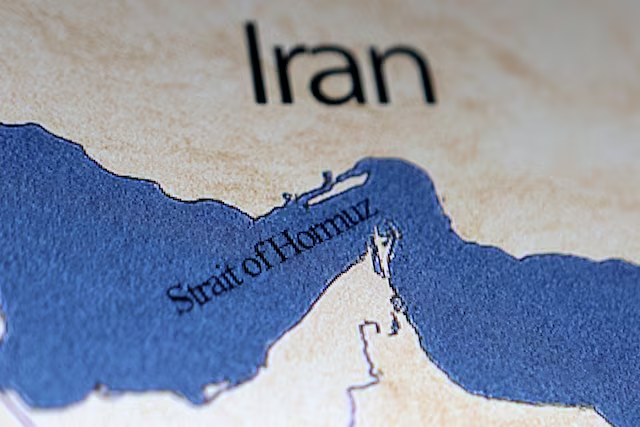
The price surge comes amid disruptions to global energy supplies and tensions affecting the Strait of Hormuz—a key maritime corridor through which roughly one-fifth of the world’s oil supply passes.
Countries across Asia, Europe, Africa and the Americas have announced a range of policies aimed at easing the burden on consumers and maintaining stable energy supplies.
The government of India has invoked emergency powers and ordered refineries to maximize production of liquefied petroleum gas (LPG) to prevent shortages of the widely used cooking fuel. Authorities have reduced LPG sales to industries to ensure supply for the country’s 333 million households connected to the system. Officials have also urged consumers to avoid panic buying of LPG cylinders and encouraged a shift to piped natural gas where available.
South Korea is considering additional energy vouchers for vulnerable households. The government is also preparing to increase electricity generation from nuclear and coal-fired power plants to stabilize supply.
China has announced plans to release fertilizer stocks from national commercial reserves ahead of the spring planting season, as energy supply disruptions threaten agricultural production.
In Australia, the government has moved to secure domestic fuel supply by releasing petrol and diesel from national reserves. The measure aims to ease shortages affecting rural supply chains and key sectors such as mining and agriculture.
The European Commission is expected to advise member states to apply flexibility when enforcing EU rules on gas imports, amid concerns that strict regulations could delay deliveries of liquefied natural gas (LNG) needed to stabilize supplies.
Prime Minister of Italy has said the government is considering cutting fuel excise duties to reduce petrol prices. Authorities are also prepared to raise taxes on companies accused of profiteering from the energy crisis.
Malaysia has increased its petrol subsidy budget to 2 billion ringgit ($510 million), up from 700 million ringgit, to maintain fixed retail fuel prices.
The government of Philippines plans to control rising electricity bills by increasing coal-fired power generation and tightening regulation of electricity tariffs amid soaring LNG prices.
President of Brazil has signed a decree eliminating federal taxes on diesel fuel to ease pressure on domestic fuel prices.
In Egypt, authorities have introduced maximum price limits on unsubsidized bread sold in private bakeries, reviving controls on a staple food as inflation accelerates.
Ethiopia has increased fuel subsidies in an effort to shield consumers from rising global energy prices.
Analysts warn that if disruptions to global energy flows persist, governments may need to introduce further subsidies, tax cuts and supply interventions to prevent economic slowdowns and protect vulnerable households.