

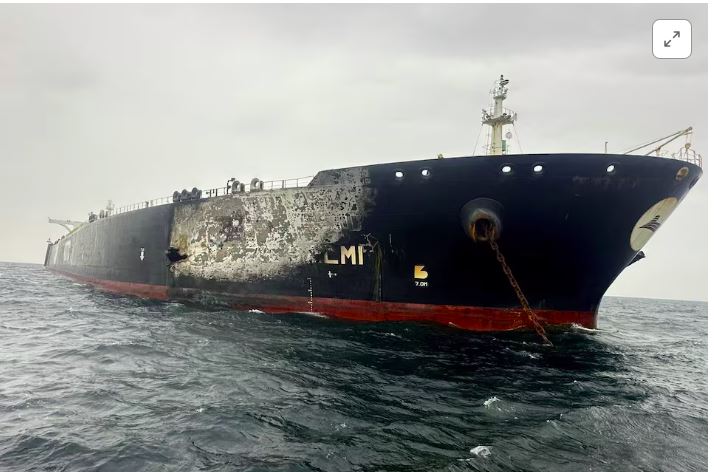

A major نفتবাহী ট্যাঙ্কার was set ablaze off the coast of Dubai on Tuesday, in a dramatic escalation of the ongoing conflict involving Iran, the United States, and Israel.
Authorities confirmed that the Kuwait-flagged oil tanker Al-Salmi, carrying nearly 2 million barrels of crude oil, caught fire following a suspected drone attack. The blaze was later brought under control, with no casualties or oil spill reported. However, the vessel sustained structural damage, according to its owner, Kuwait Petroleum Corporation.
The incident took place near the critical Strait of Hormuz—a vital global النفط shipping route that handles nearly one-fifth of the world’s oil and liquefied natural gas supplies.
The attack comes despite renewed warnings from former U.S. President Donald Trump, who threatened severe retaliation if Iran fails to agree to a peace deal and reopen the strait. Trump warned that U.S. forces could target Iran’s oil facilities and key export hub at Kharg Island.
Iran’s Revolutionary Guards claimed responsibility for targeting a vessel linked to Israel, though reports suggest the intended target may have been a nearby Singapore-flagged container ship.
Global oil markets reacted immediately, with prices briefly spiking after the incident. Analysts warn that continued disruptions in the Strait of Hormuz could send shockwaves through the global economy, as tensions threaten energy supplies.
Benchmark crude prices have surged sharply in recent weeks, while fuel costs are rising globally, adding pressure on households and governments alike.
The crisis, now over a month old, has widened beyond initial flashpoints. Iran-backed groups, including Yemen’s Houthi rebels, have intensified attacks, while clashes have also reignited between Israel and Hezbollah in Lebanon.
Explosions were reported in multiple locations, including Tehran and parts of the Gulf region. In Saudi Arabia, intercepted drones caused minor damage, while Iran reported casualties following strikes in several provinces.
Meanwhile, the China has called for an immediate halt to military actions, urging all sides to de-escalate. Pakistan is also attempting diplomatic mediation, engaging regional powers in talks.
The United States has begun deploying additional قوات, including troops from the elite 82nd Airborne Division, to the Middle East. The move signals a potential expansion of military options, including the possibility of ground operations.
Washington has set an April 6 deadline for Iran to reopen the Strait of Hormuz and reach a peace agreement. However, Iranian officials have dismissed recent U.S. proposals as “unrealistic.”
As tensions continue to rise, global leaders are warning of prolonged disruption to energy markets and increasing risks of a broader regional conflict.