

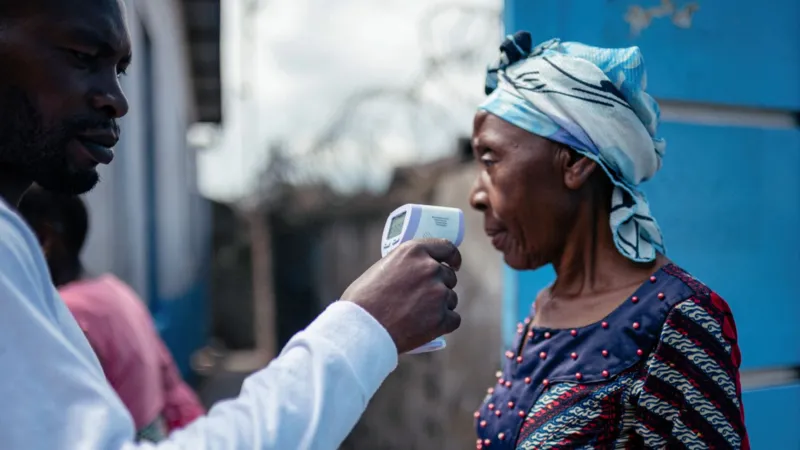

The World Health Organization has officially declared the ongoing Ebola outbreak in the Democratic Republic of the Congo a “Public Health Emergency of International Concern,” warning that the virus could spread further across the region.
The outbreak, centered in eastern Ituri Province, has already recorded around 246 suspected cases and at least 80 deaths. Health officials say the situation has not yet reached the level of a global pandemic, but the risk of wider regional transmission remains high.
According to the WHO, the outbreak is linked to the Bundibugyo strain of the Ebola virus — a rare and deadly form for which there are currently no approved vaccines or treatments. Early symptoms include fever, muscle pain, fatigue, headache, and sore throat, while severe cases can lead to vomiting, diarrhoea, internal bleeding, and organ failure.
So far, eight laboratory-confirmed cases have been identified across several health zones, including Bunia, the capital of Ituri Province, as well as the gold-mining towns of Mongwalu and Rwampara. Authorities have also confirmed one case in the capital city, Kinshasa, involving a patient who recently traveled from Ituri.
The virus has already crossed borders into neighboring Uganda, where two confirmed cases have been reported. Ugandan officials said a 59-year-old Congolese citizen who died after testing positive had recently returned from DR Congo. Another confirmed case was reported in the eastern city of Goma, an area currently under the control of M23 rebels.
Health experts warn that the worsening humanitarian crisis, armed conflict, high population movement, and limited healthcare infrastructure in eastern DR Congo are increasing the danger of rapid transmission. Bordering countries are considered especially vulnerable because of busy trade and travel routes.
WHO Director-General Tedros Adhanom Ghebreyesus said there are still “significant uncertainties” regarding the true number of infections and the geographical spread of the outbreak.
The WHO has urged both DR Congo and Uganda to establish emergency operation centers, strengthen surveillance systems, improve contact tracing, and immediately isolate confirmed patients to reduce transmission.
Despite the growing concerns, the WHO advised countries not to close borders or impose travel and trade restrictions, stating that such measures are often driven by fear rather than scientific evidence.
Ebola was first discovered in 1976 in what is now DR Congo and is believed to have originated from infected fruit bats. This marks the country’s 17th Ebola outbreak. Over the past 50 years, the virus has killed around 15,000 people across Africa.
DR Congo’s deadliest Ebola outbreak occurred between 2018 and 2020, when nearly 2,300 people lost their lives.