

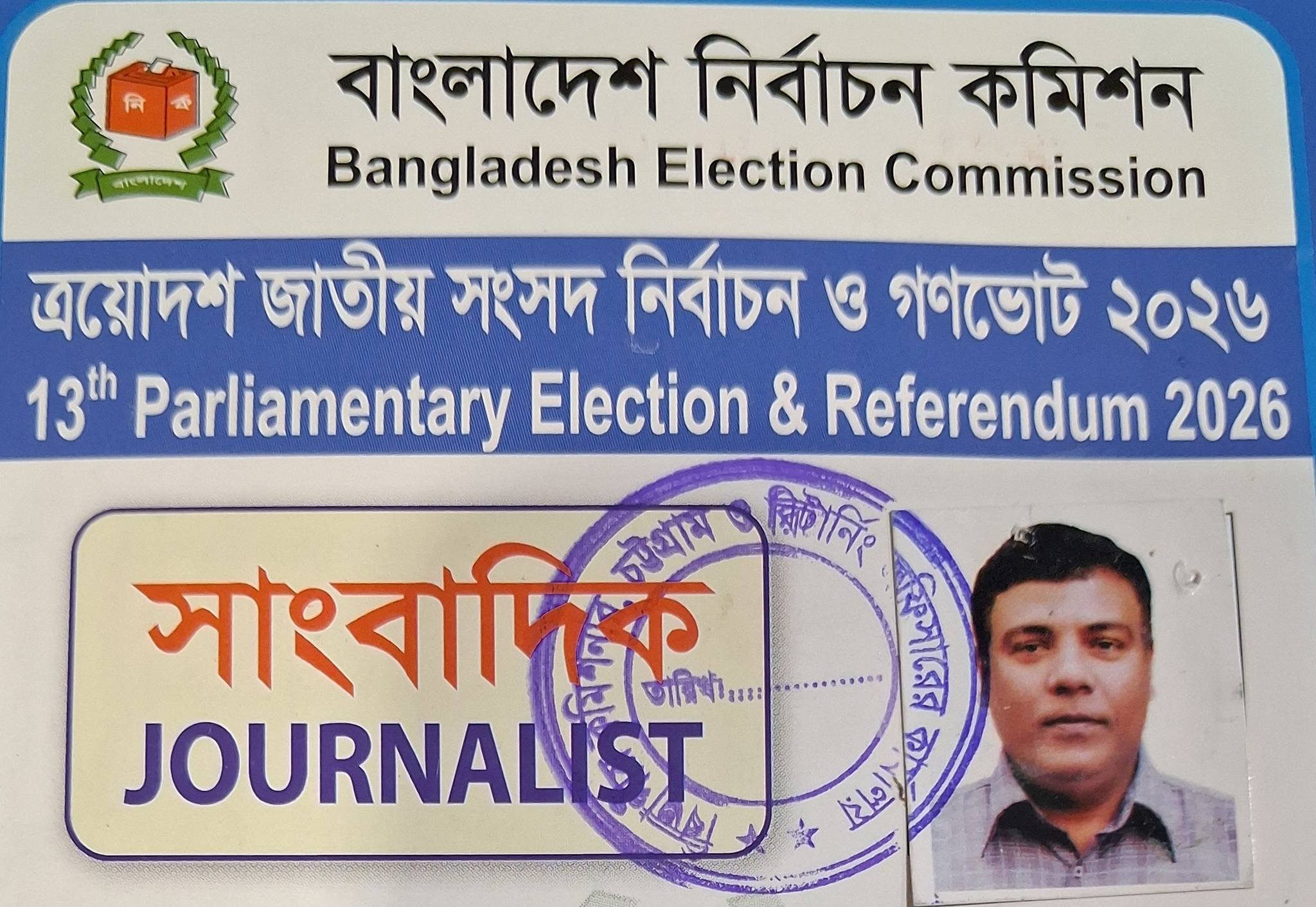

Md. Kamal Uddin: The Excitement of First Observation, the Weight of Responsibility — A Few Words to Media Professionals on the Eve of the Election Tomorrow is the National Parliamentary Election—another significant day in the long journey of our democracy. Across the country, nearly fifty thousand media professionals from various backgrounds have received accreditation to observe the election. For many, this may be their first time carrying such responsibility. Naturally, their eyes will shine with excitement and pride—because this is not merely a task; it is an opportunity to stand as a silent guardian of democracy. I have been observing elections since the 1991 national election. I still vividly remember the excitement of that first day—the thrill of an unfamiliar responsibility, the effort to read the expressions of people inside and outside polling centers. With time, experience deepened my understanding of the gravity of this duty. I have also had the opportunity to observe elections abroad and to work alongside international observer teams in Bangladesh.

In particular, during the 2001 National Parliamentary Election, under the leadership of Mr. Ahsan Arif, we worked for fifteen days with an international election observation team. Our group included representatives from Japan, Australia, Canada, Germany, and other countries. From Bangladesh, the then Attorney General Asaduzzaman and several others were involved. My friends Mozammel Haque Chowdhury and Nipu—now a professor in the Department of Journalism at the University of Chittagong—were also part of that experience. I witnessed closely how international observers paid attention to every minor detail: the environment of polling centers, the law and order situation, voters’ freedom of movement, women’s participation, access for voters with disabilities, and even the behavior of polling officials. They spoke not with emotion but with facts; they reached conclusions not through assumptions but through observation. As many young media professionals take on this responsibility for the first time, it is important to clarify one thing: election observation does not mean being eager to praise or criticize any side. It means seeing reality through impartial eyes, verifying it, and presenting the truth accurately.
Some may not know exactly how to carry out this responsibility. So, briefly: First, your accreditation card is your primary strength—but your integrity and professional ethics are even greater strengths. Second, if you observe any irregularity inside or outside a polling center, verify it before broadcasting. Confirm it through multiple sources. Third, remain neutral in tense situations. Your language should never inflame circumstances further.
Fourth, respect voters and protect their privacy. Fifth, observation does not mean only searching for problems. Highlighting good management, orderly environments, and positive aspects is equally important. On this day of democracy, we are not just journalists—we are silent witnesses to history. Future researchers, analysts, and historians may judge this period based on our reports. Therefore, there is no room for taking this responsibility lightly. Those going for the first time—let your excitement remain; it is natural. But remember, with that excitement comes deep accountability. Every moment, every scene, every action at the polling station will be reflected in the mirror of your conscience.
Since 1991, I have learned one thing: an election is not merely a voting day; it is a nation’s self-examination. And as silent examiners of that process, the role of media professionals is undeniable. Best wishes to all.
Remain responsible, remain impartial, remain steadfast in truth. In this watch of democracy, may we truly become its guardians. Media as Guardians of Democracy: Journalists’ Responsibilities, Rights, and Duties in National Elections — A Comprehensive Guide A national election is not merely a procedural act of voting; it is the democratic strength of a state, the highest expression of the people’s voice, and the foundation of political legitimacy. In this critical process, journalists do more than gather news—they serve as guardians of democracy. Through their eyes we see the field reality, through their writing we hear voters’ voices, and through their cameras history is recorded. During elections, journalism becomes a combined test of professional skill, ethics, and courage. In Bangladesh, national parliamentary elections are conducted by the Bangladesh Election Commission (EC). During elections, journalists must follow specific regulations while collecting news. The EC usually provides accreditation or special identity cards to media representatives before the election. With this authorization, journalists may enter designated polling or counting centers. Carrying both their institutional ID and the EC-issued card is essential. Entering a polling station without authorization may create legal complications. However, outside polling centers—such as voter queues, security situations, public opinion, and surrounding environments—journalists may gather information freely, as long as they do not violate the electoral code of conduct. There are clear rules for entering polling stations. Journalists must first contact the Presiding Officer and obtain permission. Protecting voter secrecy is paramount. Photography or videography inside the secret ballot booth is strictly prohibited. Journalists must not ask voters about their choices. Live broadcasts from inside polling rooms are often limited or prohibited, as they may disrupt the voting process. The journalist’s duty is to work in a way that does not interfere with voting. Legally, journalists enjoy freedom of expression protected by the Constitution. However, this freedom is not unlimited. Compliance with the electoral code of conduct, penal code, and other applicable laws is mandatory. Publishing provocative, biased, or unverified information may lead to legal consequences. Therefore, fact-checking is crucial during elections. With misinformation spreading rapidly on social media, journalists must ensure that any information they publish is accurate, verified, and evidence-based. A competent election journalist must possess certain qualities. First, impartiality—bias toward any political party, candidate, or ideology is professionally unacceptable. Second, knowledge of election laws and codes of conduct. Third, patience and composure in often tense environments. Fourth, strong verification skills, as one incorrect report can create widespread confusion. Bangladesh currently has around forty television channels, along with hundreds of registered daily, weekly, and monthly newspapers. Numerous online news portals also operate, many registered with the Ministry of Information and Broadcasting. However, the number of consistently active and professional outlets is relatively smaller. In this vast media landscape, competition intensifies during elections—but so does responsibility. Under pressure to publish quickly, verification processes sometimes weaken—something that must be avoided. Election journalism is not limited to publishing images from polling centers. Important issues include transparency in campaign financing, allegations of code violations, administrative neutrality, law and order conditions, voter turnout rates, transparency in counting, and accuracy in result announcements. Investigative reporting in these areas enhances transparency and credibility. In reality, journalists face many challenges: political pressure, obstruction by local influential groups, and sometimes physical risks. Therefore, personal safety awareness is essential. Avoid working alone in high-risk situations, keep identification visible, and seek assistance from law enforcement when necessary. Ultimately, the core strength of election journalism lies in integrity and responsibility. An accurate, evidence-based report strengthens democracy; a false or biased one breeds public confusion. During elections, journalists must observe reality impartially, verify information before publication, and safeguard public trust. If journalists remain conscious, responsible, and professional, the election will not merely be a voting process—it will become a celebration of public confidence.