


U.S. President Donald Trump stated that the conflict with Iran might only conclude with the collapse of its military and governing authorities, as Tehran moved toward selecting a new supreme leader while missile and drone activity continued across the Middle East.
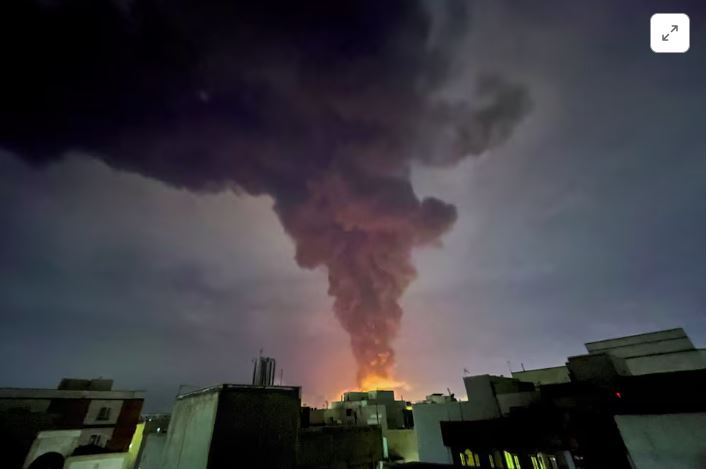
Speaking to reporters aboard Air Force One, Trump reiterated that he was not interested in negotiations to end the war, which has unsettled energy markets, disrupted global commerce, and complicated international travel. Shortly afterward, U.S. ally Israel announced additional strikes in Iran, claiming they targeted key fuel storage facilities.
Trump remarked that at some point there might be no one left to declare surrender. Meanwhile, regional tensions escalated as governments in Saudi Arabia, Kuwait, the United Arab Emirates, and Bahrain reported Iranian drone attacks. A government office building in Kuwait was engulfed in flames following a strike.
An explosion also occurred near the U.S. embassy in Oslo, Norway, causing minor structural damage but no casualties. Authorities have not determined the cause of the blast.
Saudi officials reportedly warned Iran that continued attacks on the kingdom and its energy installations could trigger retaliatory measures.
Iran’s president issued an apology to neighboring states for strikes on U.S. facilities but rejected Trump’s demand for unconditional surrender, calling it unrealistic. He added that Iran’s interim leadership had agreed to suspend operations against nearby countries unless attacks on Iran originated from their territory. His comments sparked criticism from hardline factions, prompting assurances that Iran’s military would respond forcefully to any aggression from U.S. bases.
Iranian media reported that the council responsible for choosing a successor to the late supreme leader Ayatollah Ali Khamenei might convene soon, with officials suggesting consensus on a potential candidate. Israel warned that it would oppose any successor viewed as hostile.
Trump defended the U.S. military campaign, arguing that Iran posed an imminent threat—though he provided no public evidence—and claimed Tehran was close to developing nuclear weapons. Reports indicated that U.S. and Israeli officials had discussed the possibility of deploying special forces to secure Iran’s highly enriched uranium stockpiles later in the conflict.
Large explosions were reported in parts of Tehran as Israel acknowledged strikes on missile sites and fuel depots. Iranian officials stated that hundreds of civilians had been killed and thousands injured since the start of U.S.-Israeli operations, while U.S. officials continued investigating an earlier strike on a girls’ school that reportedly killed children.
Iranian attacks have resulted in casualties in Israel and U.S. personnel losses. Iran claimed responsibility for strikes on U.S. bases in Kuwait. In response to cross-border fire from the Iran-aligned group Hezbollah, Israel launched further operations in Lebanon, warning of severe consequences if attacks continued. The conflict has driven energy prices higher and disrupted trade and transportation networks.
Kuwait’s national oil company reduced production amid regional output cuts from Iraq and Qatar, while global oil prices reached multi-year highs as maritime routes became increasingly affected.